Decomposition kilns are critical components in modern cement manufacturing, serving as high-temperature gas-solid reactors where the majority of raw material decomposition takes place before entering the rotary kiln. The performance, reliability, and energy efficiency of these systems largely depend on the quality of the refractory materials for decomposition kilns used in their lining structures. Selecting the right refractory solution helps withstand high temperatures, chemical attack, mechanical wear, and coating formation, ensuring stable operation and extended service life. In modern dry-process cement plants, the decomposition rate of calcium carbonate can reach 90–95%, making proper refractory selection an essential factor in maintaining production efficiency.
1. Structural and Functional Characteristics of Decomposition Kilns
Decomposition kilns can be categorized according to the main gas flow patterns within the system. The four fundamental types include:
- Cyclone-type kilns: Utilize a swirling flow of gases to enhance heat and mass transfer.
- Spouted bed kilns: Combine fluidization and spouting to achieve uniform material distribution.
- Suspended-bed kilns: Maintain materials in a lifted state by upward gas flow for uniform heating.
- Fluidized bed kilns: Use a fully fluidized bed to ensure homogeneous heating and decomposition.
Typical pre-decomposition temperatures in these kilns, measured at the wall surface, generally do not exceed 1200°C. Under such conditions, the raw materials largely avoid the formation of a liquid phase, minimizing clinkering or sintering. Furthermore, the relatively stable thermal state within the kiln means that the refractory lining does not require extreme high-temperature resistance or mechanical strength.
Because decomposition kilns are stationary, larger kiln shells can accommodate more refractory materials, allowing the use of low thermal conductivity insulating materials. This helps reduce shell temperature, improving energy efficiency. Additionally, the complex geometries of these kilns make castable refractories that can be formed in situ highly suitable.
2. Thermal and Chemical Requirements of Refractory Materials
During the heating and decomposition of cement raw materials, volatile harmful compounds, such as alkalis, chlorine, and sulfur, are released, condense, and circulate repeatedly. Therefore, refractory materials and associated metal components must demonstrate strong resistance to chemical corrosion from alkali and sulfur compounds.
The inner surfaces of the refractory lining in high-temperature zones are prone to scaling or the formation of hard deposits due to the condensation of low-melting compounds from raw materials or fuel ash. This phenomenon, if uncontrolled, can block material flow and reduce production efficiency. Consequently, the refractory materials used must possess excellent anti-scaling properties.
Additionally, the large size of components within decomposition kilns requires refractory linings to exhibit high compressive and flexural strength to withstand mechanical stresses.
3. Types of Refractory Materials for Decomposition Kilns
The choice of refractory materials depends on both thermal and chemical demands. Traditional and modern practices include:
3.1 High-Alumina Bricks
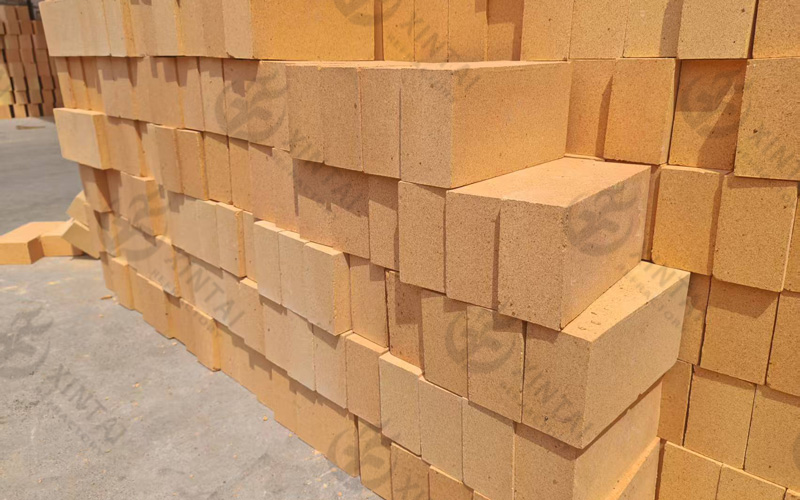
High-alumina bricks, especially those with anti-spalling properties, have become the standard lining material in modern decomposition kilns. They offer several advantages:
- High temperature resistance: Can withstand kiln temperatures up to 1200°C or slightly higher.
- Chemical stability: Resist corrosion from alkalis, chlorine, and sulfur compounds present in raw materials.
- Mechanical strength: Sufficient compressive and flexural strength to endure the weight and thermal stress of kiln operation.
- Anti-spalling performance: Prevents the breaking or detachment of bricks under thermal cycling and chemical attack.
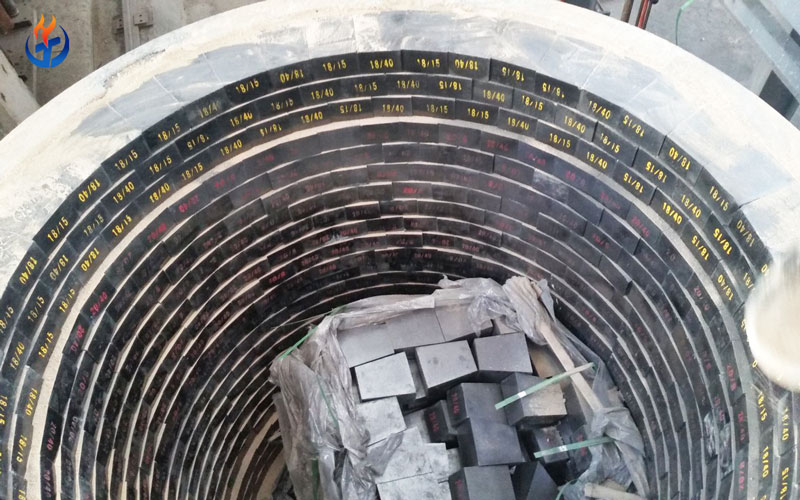
High-alumina bricks are often used in the main kiln body, while castable high-alumina refractories are applied in more complex regions, such as the kiln throat or goose-neck areas.
3.2 Anti-Spalling Castable Refractories
In critical regions prone to high thermal gradients or mechanical wear, such as the narrowed sections and elbows of the kiln, anti-spalling castables are preferred. They offer:
- Flexible installation: Can be cast in situ to match complex kiln geometries.
- Resistance to thermal shock: Maintain structural integrity during sudden temperature changes.
- Durability: Reduce maintenance needs and prolong service life.
3.3 High-Alkali-Resistant Bricks
Earlier designs favored high-alkali-resistant bricks due to their chemical resilience and cost-effectiveness. These bricks perform well at moderate temperatures and provide good mechanical strength. However, as kiln sizes and operating temperatures increased, their performance became insufficient:
- Lower softening temperature under load: Leads to shrinkage and deformation at high temperatures.
- Reduced wear resistance: Unable to withstand abrasive action from flowing materials over extended periods.
Hence, high-alkali bricks are now often replaced with high-alumina or anti-spalling materials in modern decomposition kiln designs.
3.4 Anti-Scaling Castables
In the kiln exit areas, such as the tail gas chamber and discharge chutes, refractory surfaces are highly susceptible to scaling due to the condensation of low-melting alkali-sulfur-chloride compounds. To address this, specialized anti-scaling castables are used.
- Composition: Typically formulated with silicon carbide, ultrafine powders, and calcium aluminate cement as a binder. Additives are included to inhibit the formation of surface coatings.
- Functionality: Silicon carbide provides high hardness and low wettability, preventing chemical infiltration and adhesion of raw material deposits.
- Maintenance reduction: Minimize the formation of scales and reduce the need for mechanical cleaning, preserving the integrity of the lining.
3.5 Insulating Materials
Energy efficiency is crucial in modern cement plants. Insulating materials, such as calcium silicate boards, are applied externally to reduce heat loss. Advantages include:
- Lower shell temperatures: Protects structural components and reduces energy consumption.
- Flexibility: Can be adapted to various kiln geometries.
- Cost-effective: Reduces overall refractory volume and maintenance requirements.
4. Selection Criteria for Refractory Materials
Choosing the appropriate refractory material involves balancing thermal, chemical, and mechanical considerations. Key factors include:
- Operating temperature: Materials must withstand peak temperatures without structural degradation.
- Chemical resistance: Ability to resist corrosion from alkalis, sulfur, chlorine, and other compounds.
- Thermal shock resistance: Tolerate sudden temperature changes without cracking or spalling.
- Mechanical strength: High compressive and flexural strength to withstand weight and abrasive forces.
- Anti-scaling capability: Prevent deposit formation that can block material flow.
- Ease of installation: Especially for areas with complex shapes, castable refractories offer flexibility.
Conclusion
The selection of refractory materials for decomposition kilns is a complex process requiring careful consideration of thermal, chemical, and mechanical factors. Modern trends emphasize:
- High-alumina bricks for general kiln lining due to their high strength, chemical resistance, and anti-spalling properties.
- Anti-spalling castables for complex areas and zones subject to mechanical or thermal stress.
- Anti-scaling castables for regions susceptible to deposits from volatile compounds.
- Insulating materials for energy efficiency and shell protection.
By adopting these materials strategically, cement plants can ensure efficient decomposition of raw materials, protect critical components, reduce maintenance costs, and achieve long-term operational reliability. The careful integration of refractory bricks, castables, and insulating materials forms the foundation of a resilient and energy-efficient decomposition kiln system.
Looking for a reliable supplier of refractory materials for Decomposition Kilns?
Xintai Refractory offers expert-engineered refractory products for every part of your cement production line.
Contact us today to receive customized solutions and a free technical consultation.
With two decades of experience serving cement plants globally, we’re ready to support your thermal performance goals.