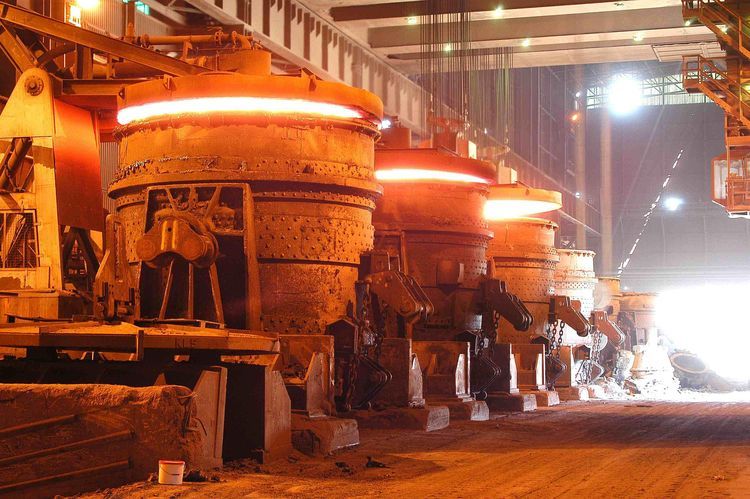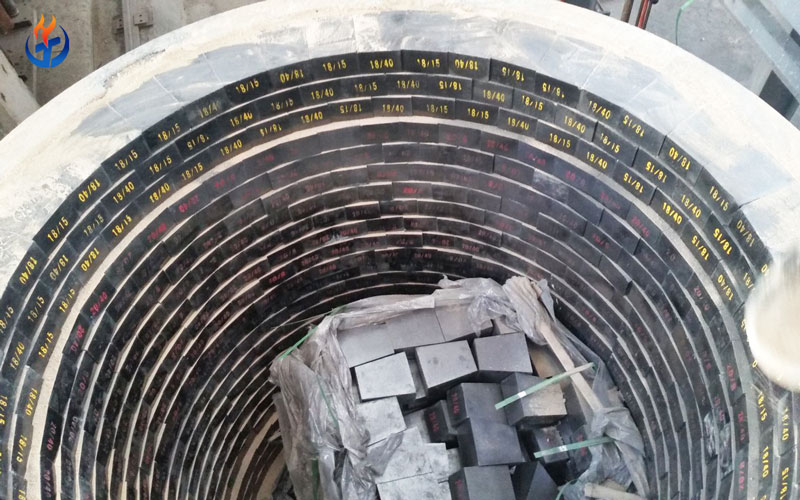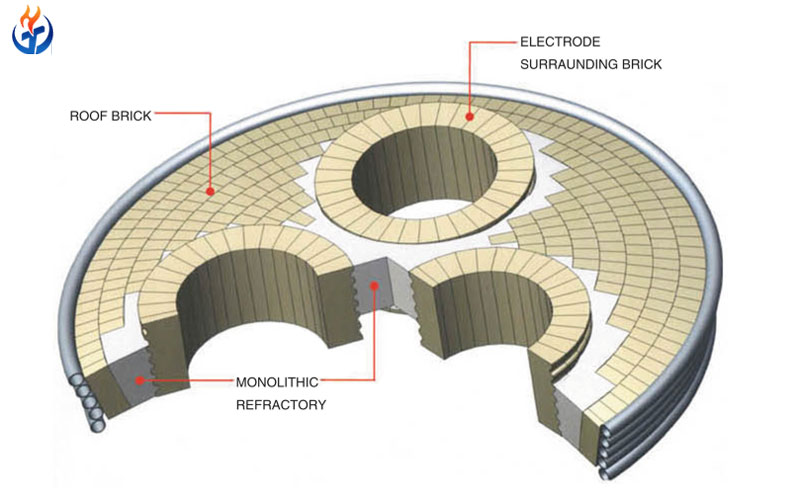
Twin-chamber lime kiln refractory bricks are essential for maintaining stable kiln operation under high temperatures, thermal cycling, material abrasion, and chemical attack. A twin-chamber lime kiln, also known as a twin-shaft lime kiln, uses different refractory materials in different zones because the temperature, mechanical load, gas flow, and chemical environment vary throughout the kiln.
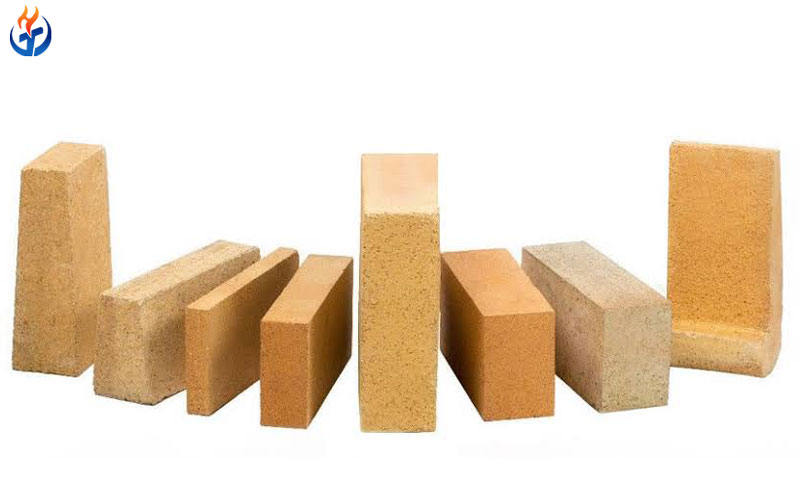
Common Twin-Chamber Lime Kiln Refractory Bricks include high alumina bricks, fireclay bricks, mullite bricks, magnesium-alumina spinel bricks, phosphate-bonded high alumina bricks, silicon-mullite bricks, and corundum-mullite bricks. Refractory castables and lightweight insulation materials may also be used in special areas.
Selecting the appropriate refractory brick for each section can help improve resistance to thermal shock, wear, alkaline attack, deformation, and high-temperature erosion while extending the service life of the kiln lining.
1. Why Twin-Chamber Lime Kilns Need Different Refractory Bricks
A twin-chamber lime kiln generally consists of preheating zones, calcining zones, and cooling zones, together with connecting channels, suspension cylinders, arch bridges, kiln outlets, and other structural sections.
Each area has different operating conditions. The preheating zone is exposed to moderate temperatures, material impact, dust, and thermal cycling. The calcining zone experiences the highest temperatures and significant chemical and thermal stress. The cooling zone is affected by rapid temperature changes, abrasion, and gas flow.
For this reason, Twin-Chamber Lime Kiln Refractory Bricks should be selected according to the actual working conditions of each zone rather than using one refractory grade throughout the entire kiln.
2. High Alumina Bricks for the Preheating Zone
The preheating zone normally operates at approximately 600–1000°C. Although this temperature is lower than that of the calcining zone, the refractory lining still needs good thermal shock resistance and adequate mechanical strength.
Second-grade and third-grade high alumina bricks containing approximately 55–65% Al₂O₃ are commonly considered for conventional preheating sections. They provide a practical combination of strength, thermal stability, abrasion resistance, and cost efficiency.
Mullite bricks can be used in areas where material impact, thermal cycling, or gas erosion is more severe. Their high-temperature stability and resistance to thermal shock can make them suitable for demanding sections around charging and material-flow areas.
Dense fireclay bricks are another economical option for relatively low-temperature sections. When the mechanical and thermal requirements are moderate, fireclay bricks can provide sufficient performance without unnecessarily increasing refractory costs.
3. Magnesium-Alumina Spinel Bricks for the Calcining Zone
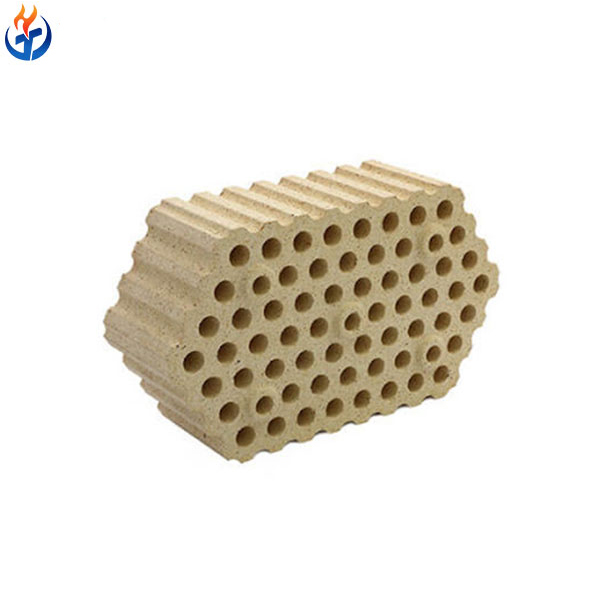
The calcining zone is the most demanding section of a twin-chamber lime kiln. Temperatures can reach approximately 950–1400°C, while the refractory lining is exposed to high thermal stress, lime-related chemical attack, mechanical loading, and repeated temperature changes.
Magnesium-alumina spinel bricks are an important choice for demanding calcining applications. Their MgO-Al₂O₃ composition provides good high-temperature stability and resistance to chemical interaction with lime and alkaline materials.
Depending on the kiln design and operating conditions, magnesium-alumina spinel refractories may contain a high proportion of MgO with an appropriate Al₂O₃ content. Their resistance to thermal shock and high-temperature deformation can help maintain lining integrity during long-term operation.
For less severe conditions or projects where cost optimization is important, special-grade high alumina bricks with Al₂O₃ contents of approximately 75% or higher can also be considered.
4. Phosphate-Bonded and Silicon-Mullite Refractory Bricks
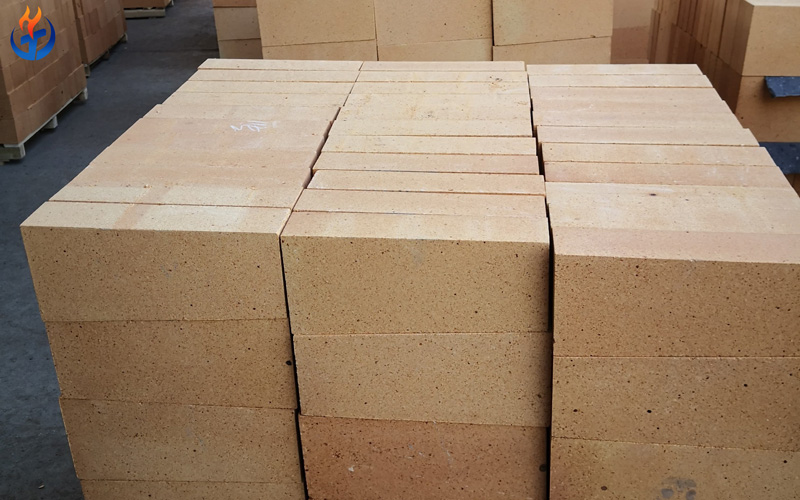
Phosphate-bonded high alumina bricks are another type of Twin-Chamber Lime Kiln Refractory Bricks used in areas requiring good abrasion resistance and thermal stability.
The phosphate bonding system can provide useful performance in sections exposed to mechanical impact, thermal cycling, and chemical attack. These bricks may be considered for connecting passages and other areas where conventional high alumina bricks may not provide sufficient durability.
Silicon-mullite bricks can also be selected for demanding high-temperature sections. They combine high-temperature stability with good resistance to thermal shock and abrasion. This makes them suitable for applications where the refractory lining is exposed to both thermal and mechanical stress.
The specific grade should be selected according to the kiln atmosphere, temperature profile, fuel, limestone characteristics, and structural design.
5. Corundum-Mullite Bricks for High-Load Areas
Suspension cylinders, arch bridges, and other structural sections can place additional requirements on refractory materials because the lining must withstand both high temperatures and mechanical stress.
Corundum-mullite bricks may be used where high refractoriness under load, dimensional stability, and thermal shock resistance are required. Their dense structure can also provide resistance to erosion and mechanical wear.
Certain special operating conditions may require other high-performance refractory systems. The selection should consider fuel quality, kiln atmosphere, chemical attack, thermal expansion, and the mechanical loading of the refractory structure.
Because these sections can be structurally critical, refractory selection should be based on the complete kiln design rather than simply choosing the material with the highest alumina content.
6. High Alumina and Mullite Bricks for the Cooling Zone
The cooling zone is located below the calcining area and remains exposed to relatively high temperatures. In its upper section, temperatures can still approach 1000–1300°C.
High alumina bricks containing approximately 65–75% Al₂O₃ can be used in many cooling-zone applications. Their combination of compressive strength, abrasion resistance, and thermal shock resistance makes them suitable for areas exposed to moving limestone and changing temperatures.
Mullite wear-resistant bricks and dense high alumina wear-resistant bricks are particularly useful around the kiln bottom and discharge areas. These sections can experience direct material impact, continuous abrasion, and gas flow erosion.
A dense refractory structure with relatively low porosity can help reduce penetration by dust and corrosive substances while maintaining good mechanical strength.
7. Special Twin-Chamber Lime Kiln Refractory Bricks for Critical Areas
Some parts of the kiln require refractory products with more specialized properties.
Connecting channels can use phosphate-bonded high alumina bricks or mullite bricks because they may experience high gas velocity, thermal shock, and alkaline erosion.
Kiln mouths and burner areas can require corundum bricks or silicon-mullite bricks where flame exposure and high temperatures create a greater risk of thermal spalling and erosion.
Refractory castables can supplement Twin-Chamber Lime Kiln Refractory Bricks in complex-shaped sections, repair areas, and locations where conventional brick installation is difficult. Steel-fiber-reinforced castables may be considered for areas exposed to mechanical impact.
Behind the working lining, lightweight high alumina insulation bricks and ceramic fiber boards can be used to reduce heat loss and lower the temperature of the kiln shell. These materials are generally not intended to replace the main wear-resistant refractory layer.
8. Typical Performance Requirements
The technical requirements for Twin-Chamber Lime Kiln Refractory Bricks depend on their location and operating conditions.
For preheating-zone high alumina bricks, a typical reference range may include 55–65% Al₂O₃, refractoriness of approximately 1750°C or higher, good thermal shock resistance, and bulk density around 2.3 g/cm³ or above.
For magnesium-alumina spinel bricks used in high-temperature calcining areas, the composition may include approximately 60–70% MgO and 20–30% Al₂O₃, together with high refractoriness, good refractoriness under load, and bulk density around 2.8 g/cm³ or higher.
Wear-resistant high alumina bricks for cooling and discharge areas may contain approximately 65–75% Al₂O₃ and provide high compressive strength, good thermal shock resistance, and strong abrasion resistance.
These values should be considered reference specifications rather than universal standards. Actual requirements should be confirmed according to the kiln manufacturer’s design and operating conditions.
9. Refractory Installation Considerations
Proper installation is critical to achieving the expected performance of Twin-Chamber Lime Kiln Refractory Bricks.
The lining commonly consists of a refractory working layer combined with transition and insulation layers. Each layer should be installed according to the specified kiln design.
Brick joints should be controlled carefully, particularly in high-temperature sections. Poorly controlled joints can increase gas penetration and create weak points in the lining.
Thermal expansion must also be considered. Appropriate expansion joints should be incorporated into the refractory lining so that thermal expansion does not generate excessive internal stress or cause cracking and spalling.
The supporting structure should be accurately aligned, and brick courses should remain level and concentric. Proper installation helps distribute mechanical loads evenly and reduces premature refractory damage.
Conclusion
The best Twin-Chamber Lime Kiln Refractory Bricks are not necessarily the same for every project. Refractory selection should begin with the operating conditions of each kiln zone.
For a conventional twin-chamber lime kiln, high alumina bricks can be used in many preheating and cooling sections, while magnesium-alumina spinel bricks or special high alumina bricks can be considered for the calcining zone. Phosphate-bonded bricks may be suitable for areas requiring additional abrasion and thermal performance.
For high-load applications, silicon-mullite and corundum-mullite bricks can provide enhanced performance in demanding areas. For cost-sensitive projects, fireclay and high alumina bricks can be combined according to temperature and wear requirements.
Ultimately, a zone-based refractory design provides a more practical approach than using one material throughout the kiln. Matching Twin-Chamber Lime Kiln Refractory Bricks to temperature, chemical attack, abrasion, thermal cycling, and mechanical loading can help improve kiln reliability, extend lining service life, and reduce maintenance costs.