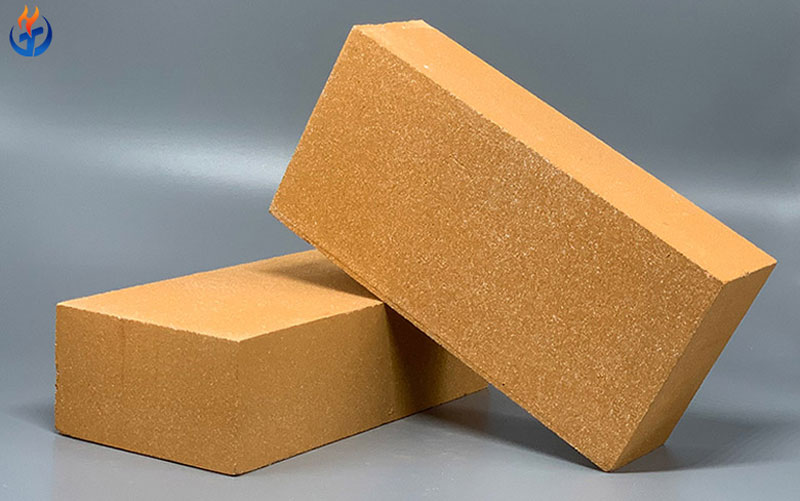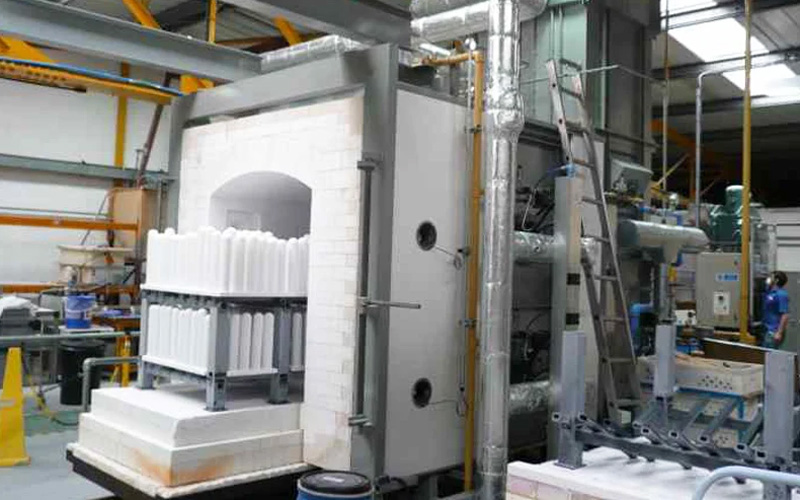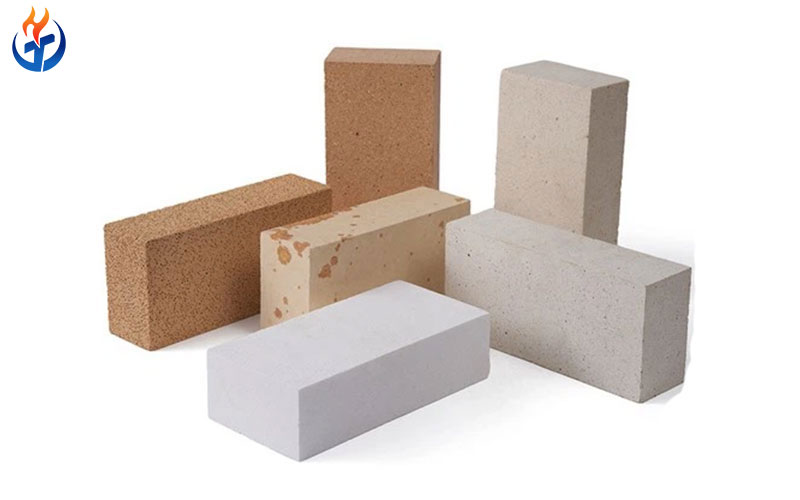
In refractory brick manufacturing, the stability of green bricks from forming to firing directly affects the quality of the finished products. Among the key parameters in the firing process, controlling the moisture content of green bricks before kiln entry is particularly important. Improper moisture control can easily lead to quality defects and, in severe cases, significant production losses.
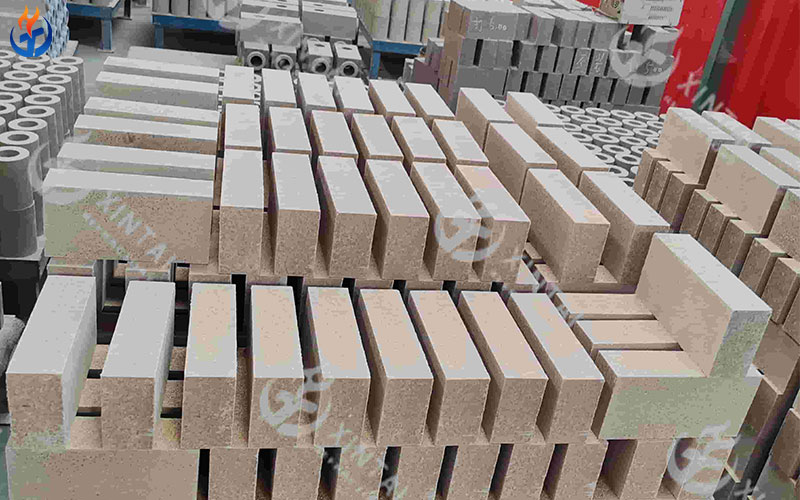
How Moisture Content Affects the Structural Stability of Green Bricks
After forming, refractory brick green bodies still contain a certain amount of free water and, depending on the raw materials and forming process, may also contain water associated with the binder system. If the moisture content is too high before kiln entry, rapid evaporation during the initial heating stage can generate excessive vapor pressure inside the bricks.
If this pressure cannot be released in time, it may cause several defects, including:
Internal microcracks within the green bricks
Surface blistering, peeling, or spalling
Severe cracking or even explosive spalling in extreme cases
Therefore, maintaining an appropriate moisture level helps preserve the structural integrity of green bricks during the initial stages of heating.
How Moisture Content Affects Firing Safety and Efficiency
During firing in tunnel kilns or shuttle kilns, the heating rate must be carefully controlled according to the established firing curve. If the green bricks contain excessive moisture, several problems may arise:
The drying and moisture removal stages take longer.
The heating rate may need to be reduced to prevent cracking and spalling.
Temperature distribution and firing conditions inside the kiln may become more difficult to control.
These issues can disrupt the normal firing schedule, reduce production efficiency, and potentially affect other products fired in the same kiln. Proper moisture control before kiln entry is therefore essential for maintaining stable kiln operation and consistent production output.
How Moisture Content Affects the Final Properties of Refractory Bricks
Even when excessive moisture does not cause visible cracking or other obvious defects, improper moisture control may still contribute to quality variations in the fired products.
Potential consequences include:
Reduced bulk density and insufficient densification
Increased apparent porosity
Lower cold crushing strength
Less consistent thermal shock resistance
Appropriate moisture control, combined with a suitable drying and firing schedule, helps promote uniform shrinkage and sintering. This supports more consistent physical properties and improves the overall quality stability of the finished refractory bricks.
It is important to note that final performance also depends on raw material composition, particle size distribution, forming pressure, firing temperature, and soaking time. Moisture control is a critical part of the overall process rather than the only factor determining product quality.
Moisture Requirements for Different Refractory Brick Forming Processes
Different forming methods require different moisture control standards. The appropriate moisture content depends on the raw material system, forming process, brick dimensions, and product specifications.
Semi-Dry Pressed Bricks
Semi-dry pressing generally uses a relatively low moisture content. Precise control is necessary to ensure proper particle bonding, uniform compaction, and sufficient green strength before drying and firing.
Plastic-Formed Bricks
Plastic forming typically requires a higher moisture content than semi-dry pressing to provide adequate workability. These green bricks must be sufficiently dried before entering the kiln to minimize the risk of cracking and spalling during heating.
Large or Complex-Shaped Bricks
Large-sized refractory bricks and products with complex geometries require particular attention to moisture distribution and drying uniformity. Differences in thickness and shape can lead to uneven drying rates, increasing the risk of internal stresses and cracking.
For this reason, manufacturers should establish appropriate moisture content limits and drying requirements according to the specific refractory product, forming method, and production conditions.
Why Strict Moisture Control Improves Production Stability
Effective moisture control before kiln entry offers several important benefits for refractory brick manufacturers:
Reduced risk of cracking and explosive spalling: Proper drying minimizes excessive vapor pressure during initial heating.
Improved firing yield: Fewer moisture-related defects help reduce product rejection and material waste.
More consistent product quality: Stable pre-firing conditions support better batch-to-batch consistency.
Improved kiln efficiency: Appropriate moisture levels help maintain the planned firing schedule and reduce unnecessary delays.
These benefits extend beyond the quality of individual bricks. They also contribute to the reliability, efficiency, and stability of the entire refractory manufacturing process.
Conclusion
Although moisture content is a basic process parameter, it plays a significant role in the safe firing and quality control of refractory bricks. Excessive residual moisture can increase the risk of cracking and spalling, disrupt kiln operation, and contribute to variations in finished product performance.
By implementing appropriate drying procedures, monitoring moisture content, and establishing product-specific pre-kiln moisture standards, refractory manufacturers can improve firing stability, reduce production losses, and achieve more consistent product quality.
At Xintai Refractory, process control and product quality are important considerations in refractory manufacturing. Proper management of each production stage, including green brick drying and kiln preparation, helps establish a solid foundation for reliable refractory products.