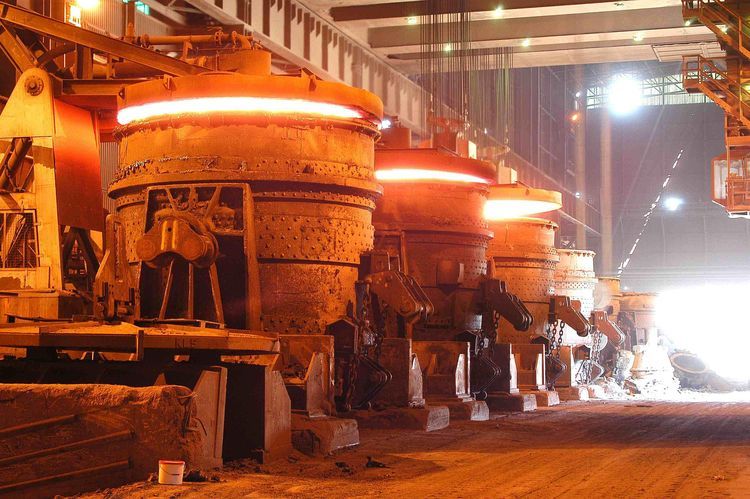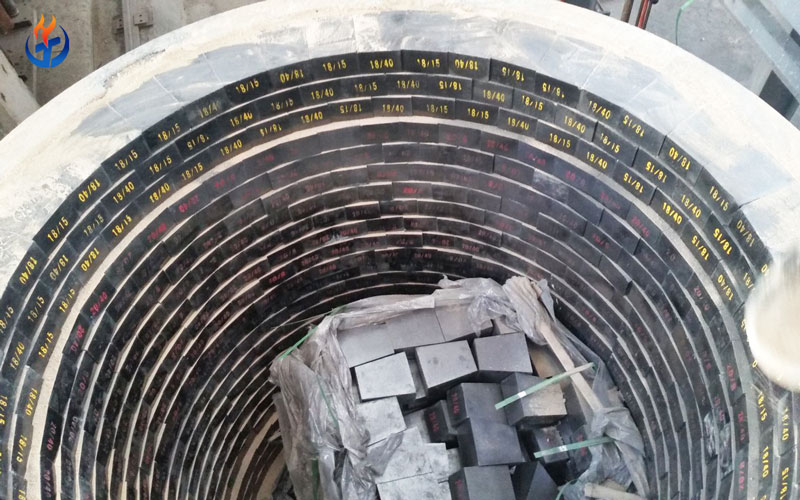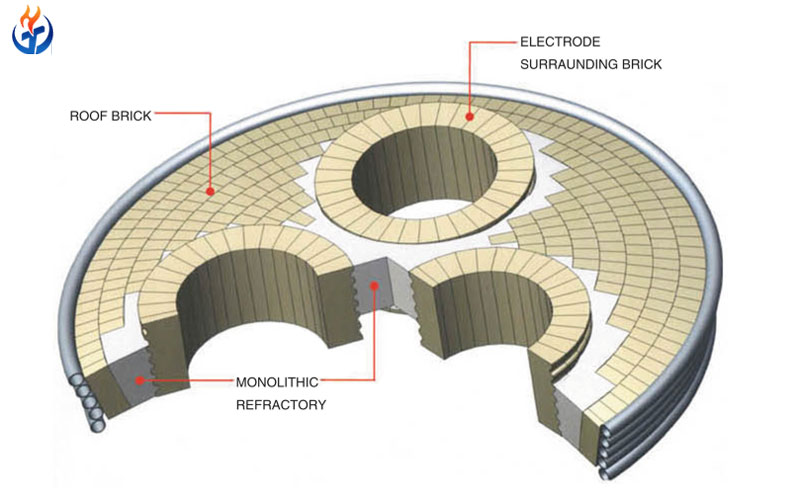
Lime kilns operate under extremely aggressive industrial conditions, including high temperatures, strong alkaline chemical attack from CaO, severe mechanical abrasion from raw limestone movement, and frequent thermal cycling. These combined factors make refractory lining selection one of the most critical engineering decisions in kiln design and maintenance.
Whether it is a rotary kiln or a vertical shaft kiln, the performance, energy efficiency, and service life of the system depend heavily on the correct configuration of refractory materials. In industrial practice, lime kiln refractory bricks are selected based on temperature zones, chemical exposure, mechanical stress, and thermal shock conditions.
Different kiln sections require fundamentally different refractory characteristics. No single brick type can perform optimally across the entire kiln. Therefore, engineers use a zoned design approach to match material properties with operating conditions.
Overview of Lime Kiln Types and Working Conditions
Before analyzing refractory selection, it is important to understand the two main kiln types:
Rotary Lime Kiln
Rotary kilns are long, slightly inclined rotating cylinders where limestone is continuously fed and gradually moves toward the discharge end.
Key characteristics:
- Continuous operation
- High mechanical abrasion from tumbling material
- Strong thermal gradients
- Severe alkaline vapor attack in hot zones
Vertical Shaft Kiln
Vertical kilns operate under gravity flow, where limestone descends while hot gases rise.
Key characteristics:
- More stable thermal profile
- Lower mechanical wear compared to rotary kilns
- Higher static load on refractory lining
- Strong dependence on permeability and structural stability
Both kiln types rely on optimized lime kiln refractory bricks configurations, but rotary kilns typically require more advanced abrasion and thermal shock resistance.
Temperature Zones and Refractory Requirements
A lime kiln is divided into several functional zones, each with distinct thermal and chemical conditions:
- Preheating zone (700–1050°C)
- Transition zone (1050–1200°C)
- Burning zone (1300–1500°C)
- Cooling zone (600–1400°C fluctuating)
- Kiln inlet and outlet zones (high mechanical and thermal stress)
Each zone requires specific refractory properties such as:
- High refractoriness under load (RUL)
- Strong resistance to CaO alkaline corrosion
- Excellent thermal shock resistance
- High abrasion resistance
- Structural density and low porosity
Burning Zone Refractories (1300–1500°C, Strong Alkaline Corrosion)
The burning zone is the most critical area in lime kiln engineering. This region experiences the highest temperature and the most severe chemical attack due to active lime formation (CaO).
Magnesium Aluminate Spinel Bricks (Magnesia-Alumina Spinel Bricks)
These are among the most widely used high-performance materials in modern lime kilns.
Key advantages:
- Outstanding resistance to alkaline slag and CaO penetration
- Excellent high-temperature stability
- Strong creep resistance under load
- Improved thermal shock resistance compared to traditional magnesia bricks
They are commonly used in large rotary kilns with demanding production conditions.
Silicon Carbide–Mullite Bricks (SiC-Mullite Bricks)
These composite bricks combine silicon carbide and mullite phases, offering a balanced performance profile.
Key properties:
- High wear resistance under mechanical abrasion
- Excellent thermal shock resistance
- Strong resistance to chemical corrosion
- Cost-effective compared to premium spinel systems
They are widely used in high-wear burning zones where material flow is intense.
Phosphate-Bonded High Alumina Bricks
These bricks are chemically bonded, providing high strength at moderate cost.
Advantages:
- High mechanical strength
- Good abrasion resistance
- Stable performance under medium-high temperature
- Economical solution for medium-sized kilns
Magnesia and Direct-Bonded Magnesia-Chrome Bricks
In extremely aggressive alkaline environments, magnesia-based refractories may be used.
Features:
- Very strong resistance to alkaline corrosion
- High temperature stability
- Suitable for low-quality fuel environments with high impurity content
However, environmental concerns have reduced the usage of magnesia-chrome materials in many regions.
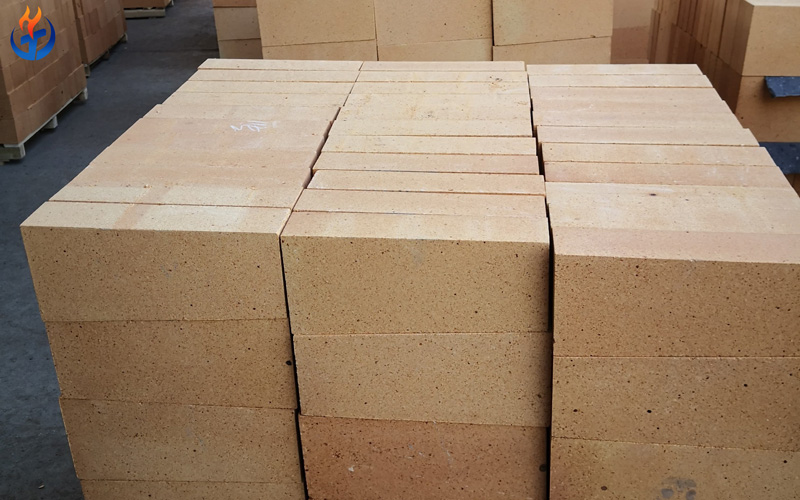
Transition and Calcination Zone (1200–1350°C)
This zone experiences rapid temperature fluctuations and moderate chemical attack. Thermal shock resistance becomes the dominant requirement.
Mullite Bricks
Mullite-based refractories are widely used due to their excellent thermal stability.
Performance characteristics:
- Low thermal expansion
- Strong resistance to cracking under thermal cycling
- Stable volume at elevated temperatures
They are particularly suitable for kiln sections with frequent heating and cooling cycles.
High Alumina Bricks (Al₂O₃ 60%–75%)
These high alumina bricks are standard industrial refractories used in many kiln systems.
Advantages:
- High compressive strength
- Good slag resistance
- Balanced cost-performance ratio
They are commonly used in medium-load areas of lime kilns.
Preheating Zone (700–1050°C, Abrasion-Dominant Environment)
The preheating zone is characterized by relatively lower temperature but high mechanical wear due to raw limestone movement.
Dense Clay Bricks
Clay bricks are often used in low-stress sections.
Properties:
- Low cost
- Adequate abrasion resistance for mild conditions
- Suitable for non-critical kiln zones
Secondary or Tertiary High Alumina Bricks
These grades provide better durability than clay bricks.
Advantages:
- Improved wear resistance
- Better structural stability under load
- Longer service life in industrial operation
This makes them a standard choice for long-term kiln lining economy.
Cooling and Kiln Inlet/Outlet Zones (600–1400°C Fluctuating)
These areas are exposed to rapid temperature changes and strong mechanical impact from material discharge and airflow turbulence.
High Alumina Phosphate Bricks
These bricks provide enhanced resistance to thermal shock and abrasion.
Key benefits:
- High bonding strength
- Good resistance to cracking
- Long service life under cyclic heating
Silicon Carbide Bricks
Silicon carbide refractories are among the most durable materials for extreme wear conditions.
Advantages:
- Extremely high hardness
- Excellent thermal conductivity
- Outstanding wear resistance
- Long operational lifespan
They are especially effective in kiln mouth and discharge areas.
Vertical Shaft Kiln Refractory Configuration
Vertical kilns require a more simplified but structurally robust refractory system.
Burning Zone
- High alumina bricks (Al₂O₃ ≥ 75%)
- Excellent resistance to high temperature and chemical attack
Preheating and Cooling Zones
- Medium alumina bricks (50%–60%)
- Clay bricks for non-critical sections
The key design focus is structural stability under static load rather than abrasion resistance.
Key Selection Criteria for lime kiln refractory bricks
When selecting refractory bricks for lime kilns, engineers evaluate several technical parameters:
1. Chemical Resistance
- Resistance to CaO penetration
- Stability under alkaline slag attack
2. Thermal Shock Resistance
- Ability to withstand rapid heating and cooling cycles
- Critical in transition and cooling zones
3. Mechanical Strength
- Resistance to abrasion and material impact
- Especially important in rotary kilns
4. Refractoriness Under Load (RUL)
- Ensures structural integrity at high temperatures under stress
5. Porosity and Density
- Lower porosity improves corrosion resistance
- Higher density improves mechanical durability
Comparative Performance Summary by Zone
Burning Zone
- Magnesium aluminate spinel bricks: highest performance
- Silicon carbide mullite bricks: balanced performance
- Phosphate high alumina bricks: cost-effective option
- Magnesia bricks: specialized high-corrosion environments
Transition Zone
- Mullite bricks: best thermal shock resistance
- High alumina bricks: general-purpose solution
Preheating Zone
- High alumina bricks: best durability balance
- Clay bricks: economical option
Cooling Zone
- Silicon carbide bricks: highest wear resistance
- Phosphate bonded bricks: stable thermal performance
Conclusion: Engineering Optimization of Lime Kiln Refractories
The selection of lime kiln refractories is a complex engineering process that requires balancing thermal resistance, chemical durability, mechanical strength, and cost efficiency. Different kiln zones demand different refractory solutions, and no universal material can meet all conditions simultaneously.
From burning zone spinel bricks to silicon carbide wear-resistant linings and high alumina structural materials, the correct combination of lime kiln refractory bricks determines overall kiln performance, energy efficiency, and operational stability.
A scientifically designed refractory system not only improves lime production efficiency but also significantly reduces maintenance downtime and long-term operating costs. Looking for refractory bricks with wholesale price? Welcome to get more from Xintai Refractory!