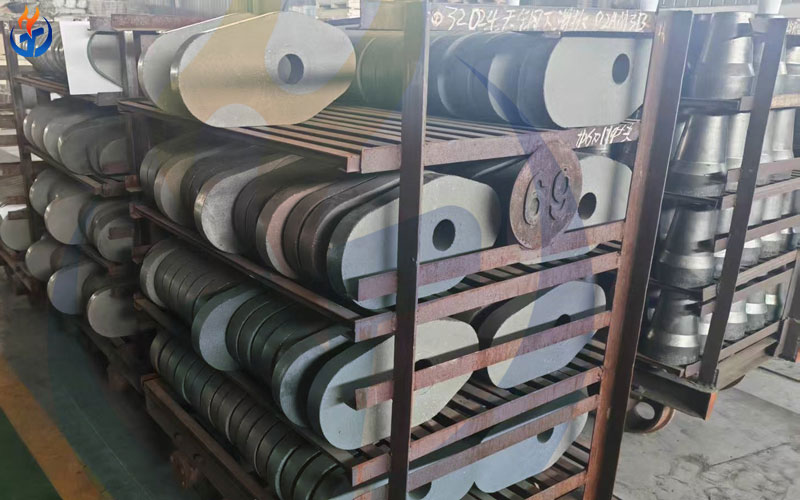
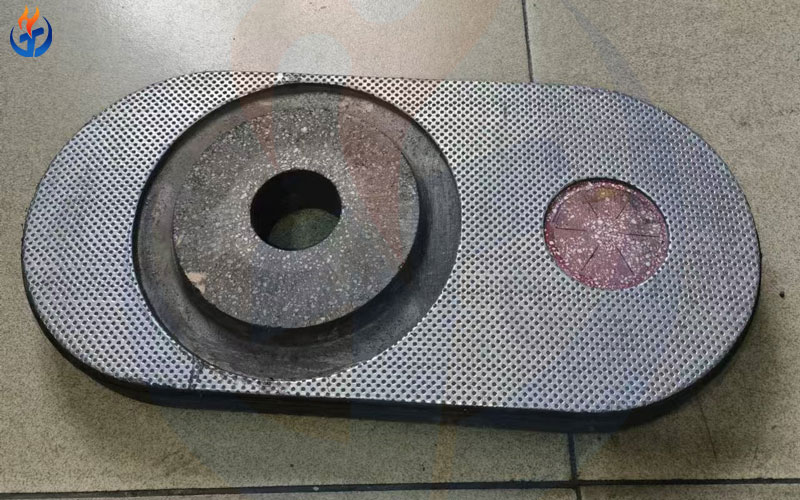
The Ladle Slide Gate Plate is an important refractory component used for controlling molten steel flow in modern steelmaking operations. By moving one refractory plate against another, a slide gate system can regulate the opening through which molten steel passes. This makes accurate flow control possible during tapping, ladle treatment, and continuous casting.
Because steelmaking involves temperatures exceeding 1,500°C and highly aggressive molten metal and slag, slide gate plates must provide reliable resistance to thermal shock, erosion, corrosion, and mechanical stress. Their applications therefore extend across many areas of the steel industry, from basic ladle slide gate systems to sophisticated continuous casting lines and special steel production.
Application in Ladle Slide Gate Systems
The most direct application of a Ladle Slide Gate Plate is inside a steel ladle slide gate system. The system is installed at the bottom of the ladle and controls the discharge of molten steel.
During operation, one or more refractory plates move relative to each other. The size of the flow opening determines how much molten steel can pass through the system. Operators can therefore open, restrict, or close the molten steel stream according to production requirements.
This application requires slide plates with good dimensional accuracy and high resistance to erosion. The plate must also maintain its shape when exposed to molten steel for extended periods.
Application in Continuous Casting Systems
Continuous casting is one of the most important applications for Ladle Slide Gate Plates. In a continuous casting process, molten steel must be transferred from the ladle to the tundish at a controlled and stable rate.
The slide gate helps regulate this transfer. Stable flow control is essential because excessive or insufficient steel flow can affect tundish operation and casting stability.
During continuous casting, the refractory plate is exposed to high temperatures and continuous molten steel flow. As a result, resistance to wear and erosion around the opening is particularly important.
A properly selected slide plate can help maintain a consistent flow passage throughout the casting process and reduce the risk of premature refractory failure.
Application in Electric Arc Furnace Steelmaking
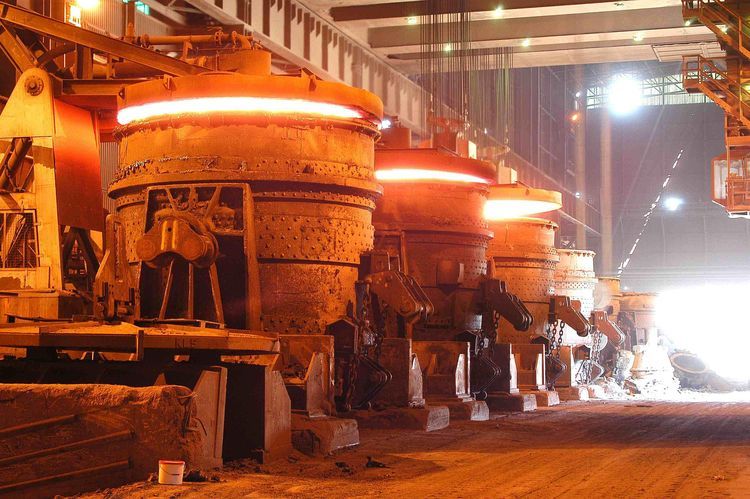
Electric Arc Furnaces, commonly known as EAFs, are widely used to melt steel scrap and other metallic raw materials. After melting and refining, the molten steel is transferred into a ladle for further treatment or casting.
The Ladle Slide Gate Plate can be used to control the discharge of this molten steel. EAF operations may expose refractories to challenging thermal conditions because of high operating temperatures and variations in slag composition.
For this reason, slide plates used in EAF-related steelmaking need suitable thermal shock resistance, corrosion resistance, and mechanical strength. Material selection should take into account the specific steel grade, slag characteristics, ladle capacity, and casting process.
Application in Converter Steelmaking
Converter steelmaking, including basic oxygen furnace operations, is another major field where Ladle Slide Gate Plates are used.
After molten iron and scrap are refined in the converter, the resulting molten steel is tapped into a ladle. The ladle then transports the steel to subsequent refining or casting operations. The slide gate controls the discharge of molten steel from the ladle.
During this process, the refractory system must withstand high temperatures and contact with molten steel and slag. Slag carryover can also influence refractory wear because the chemical composition of slag may be aggressive toward certain refractory materials.
Selecting a slide plate with appropriate corrosion and erosion resistance can therefore help improve service reliability.
Application in Special Steel Production
Special steel production often places greater demands on refractory components because the process may involve strict requirements for steel cleanliness, temperature control, and chemical composition.
Special steels can include stainless steels, tool steels, bearing steels, alloy steels, and other products with specific performance requirements. During these processes, stable molten steel flow is important for maintaining consistent production conditions.
Ladle Slide Gate Plates used for special steel production may require carefully selected refractory compositions to reduce chemical interaction with molten steel and slag.
Depending on the process, alumina-based, alumina-carbon, alumina-zirconia-carbon, zirconia, or other specialized refractory materials may be considered.
Application in Steel Continuous Casting Lines
Ladle Slide Gate Plates are also widely used as part of complete continuous casting production lines. In these facilities, molten steel moves through several stages before becoming billets, blooms, slabs, or other semi-finished steel products.
The ladle slide gate provides an important flow-control function between the ladle and downstream casting equipment. Reliable operation is especially important when casting continues for an extended period.
If refractory wear changes the opening size significantly, the molten steel flow may become difficult to control. Excessive erosion can also shorten service life and increase operational risks.
For this reason, slide plates used in continuous casting are selected based on expected casting duration, steel temperature, steel chemistry, ladle design, and flow-control requirements.
Application in Ladle Metallurgy
Ladle metallurgy involves secondary refining processes performed after primary steelmaking. These processes may include alloy adjustment, temperature control, desulfurization, vacuum treatment, and other operations.
After refining, molten steel still needs to be transferred under controlled conditions. The Ladle Slide Gate Plate remains an important component for controlling steel discharge.
In demanding ladle metallurgy operations, the refractory must tolerate repeated heating and cooling cycles as well as chemical interaction with steel and slag. High-quality slide plates can contribute to stable operation during these stages.
Application in Different Steel Casting Products
The same basic slide gate technology can be used in steel production for different cast products. Billet, bloom, and slab casting lines all require controlled molten steel transfer.
The exact slide plate design can vary according to equipment configuration and operating conditions. Bore diameter, plate dimensions, refractory composition, and mechanical installation requirements may all differ.
Therefore, manufacturers and steel plants normally need to match the Ladle Slide Gate Plate to the specific slide gate system rather than selecting a product based only on its general dimensions.
Conclusion
The Ladle Slide Gate Plate has a wide range of applications throughout the steel industry. It is commonly used in ladle slide gate systems, continuous casting, electric arc furnace steelmaking, converter steelmaking, special steel production, ladle metallurgy, and complete steel continuous casting lines.
In every application, its primary function is to provide reliable and precise control of molten steel flow. However, the performance requirements can vary significantly depending on temperature, steel grade, slag chemistry, casting duration, and equipment configuration.
Choosing the appropriate refractory composition and slide plate design can help steel producers improve flow control, extend refractory service life, and maintain stable casting operations. As steelmaking technology continues to develop, reliable Ladle Slide Gate Plates will remain an important part of efficient and controlled molten steel handling.