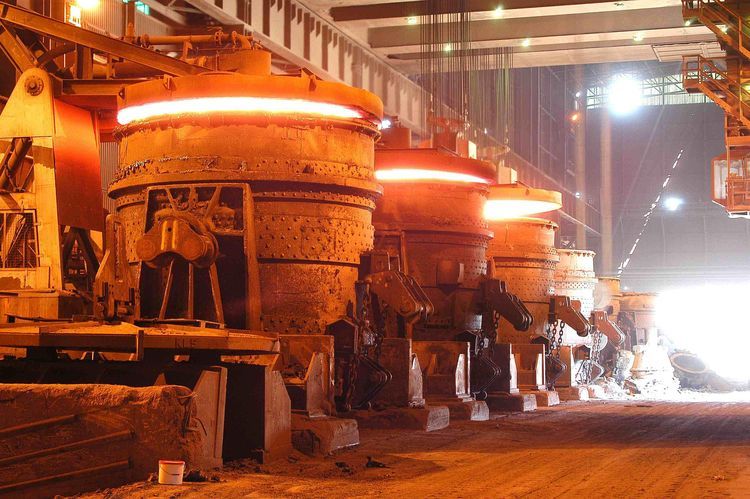
Steel production is one of the most thermally intensive industrial processes in the world. Inside steel plants, equipment operates under extreme conditions including temperatures above 1,600°C, aggressive chemical corrosion from slag, and mechanical wear from molten metal flow. Under such conditions, conventional construction materials fail rapidly.
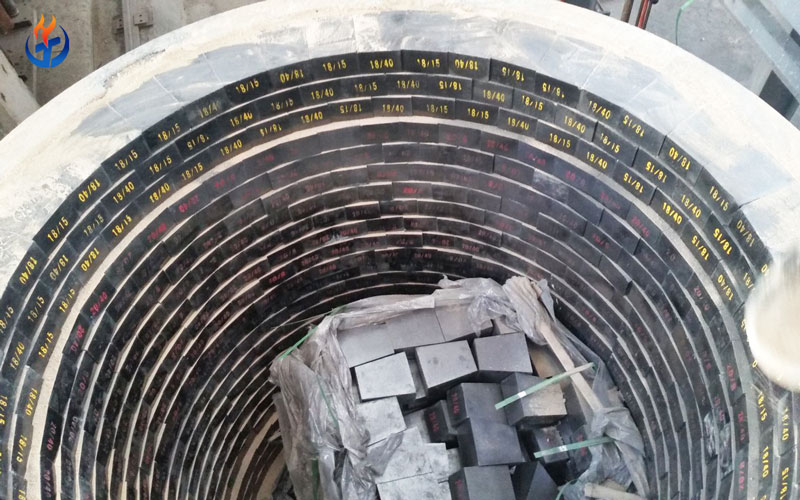
This is where steel plants refractory materials play a critical role. These high-temperature-resistant materials form the protective lining of furnaces, ladles, converters, and other metallurgical equipment, ensuring structural integrity, thermal efficiency, and continuous operation.
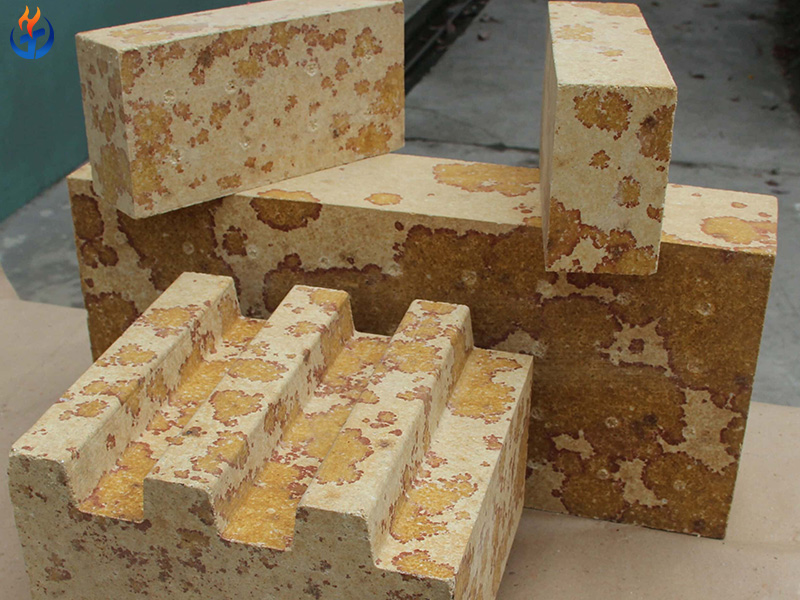
Classification of Refractory Materials in Steel Plants
There are multiple classification systems for refractories, but none is universally perfect. In industrial practice, classification is mainly based on chemical composition and application purpose.
1.1 Chemical Composition Classification
From a chemical perspective, refractories are generally divided into three categories:
Acidic Refractories
- Mainly composed of silica (SiO₂)
- Examples: silica bricks, quartz-based materials
- Properties:
- Good resistance to acidic slags
- Poor resistance to alkaline environments
- Applications:
- Coke ovens
- Glass furnaces
Basic Refractories
- Mainly composed of MgO and CaO
- Examples: magnesia bricks, dolomite bricks
- Properties:
- Excellent resistance to basic slags
- High thermal stability
- Applications:
- Basic oxygen furnaces
- Electric arc furnaces
Neutral Refractories
- Examples: alumina (Al₂O₃), carbon, chromite-based materials
- Properties:
- Balanced chemical resistance
- High thermal shock resistance
- Applications:
- Transition zones in furnaces
- High-stress structural linings
In practice, these boundaries are not absolute. Chemical reactions inside furnaces are complex, and material selection often depends on operational conditions rather than strict classification rules.
1.2 Application-Based Classification
A more practical approach for steel plants refractory materials is classification by usage:
- Blast furnace refractories
- Steelmaking furnace refractories
- Steel ladle refractories
- Reheating furnace refractories
- Auxiliary system refractories (tundish, runners, chimneys)
This classification is widely used in engineering design and maintenance planning.
Refractory Materials Used in Blast Furnaces
Blast furnaces are among the most demanding environments in steel production. The internal conditions include high temperature gradients, chemical attack from slag, and erosion from descending raw materials.
2.1 Functional Zones of Blast Furnace Linings
Steel plants refractory materials used in blast furnaces are selected based on specific zones:
1. Tuyere Zone
- Exposed to extremely high temperature and gas velocity
- Materials used:
- Carbon bricks
- High-density graphite refractories
- Key requirements:
- Thermal shock resistance
- High conductivity (for controlled heat transfer)
2. Hearth (Bottom Area)
- Contains molten iron and slag
- Materials used:
- Carbon blocks
- Ceramic cup systems
- Key requirements:
- Corrosion resistance
- Erosion resistance
3. Bosh and Belly
- High chemical attack and abrasion
- Materials used:
- High-alumina bricks
- Silicon carbide refractories
- Key requirements:
- Slag resistance
- Mechanical strength
4. Shaft (Upper Furnace Body)
- Lower temperature but high abrasion from burden materials
- Materials used:
- Clay bricks
- High-alumina bricks
- Key requirements:
- Wear resistance
- Structural stability
5. Hot Blast Stoves and Auxiliary Systems
- Used for air preheating
- Materials used:
- Silica bricks
- Checker bricks
- Key requirements:
- High thermal storage capacity
- Long cycle stability
Steelmaking Furnace Refractory Applications
Steelmaking furnaces are the core of modern steel production, including basic oxygen furnaces (BOF), electric arc furnaces (EAF), and ladle refining units.
3.1 Basic Oxygen Furnace (BOF)
The BOF process involves oxygen blowing to convert molten iron into steel.
Key refractory zones:
- Furnace lining
- Trunnion zone
- Slag line
Common materials:
- Magnesia-carbon bricks
- Dolomite refractories
- High-purity magnesia bricks
Performance requirements:
- Slag corrosion resistance
- Thermal shock resistance
- High mechanical strength
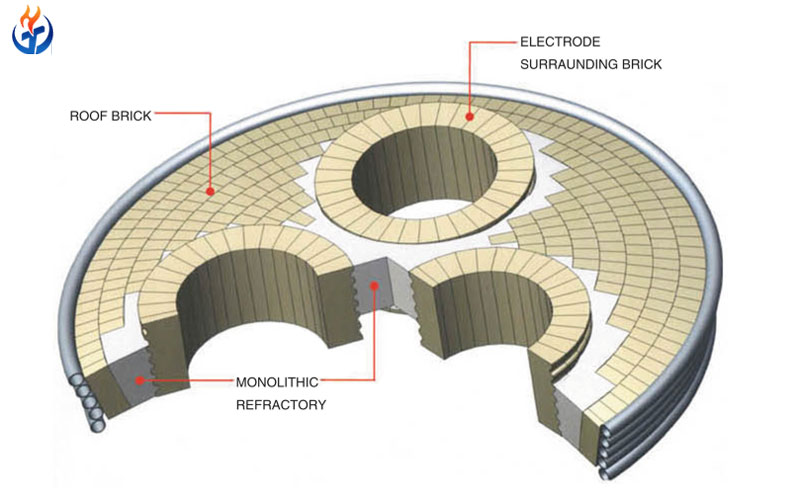
3.2 Electric Arc Furnace (EAF)
EAFs operate with extremely high thermal cycling and arc radiation.
Refractory materials used:
- Magnesia-carbon bricks (sidewalls)
- Alumina refractories (roof)
- Gunning mixes for maintenance
Characteristics:
- Rapid temperature fluctuation resistance
- Arc erosion resistance
- Easy repairability
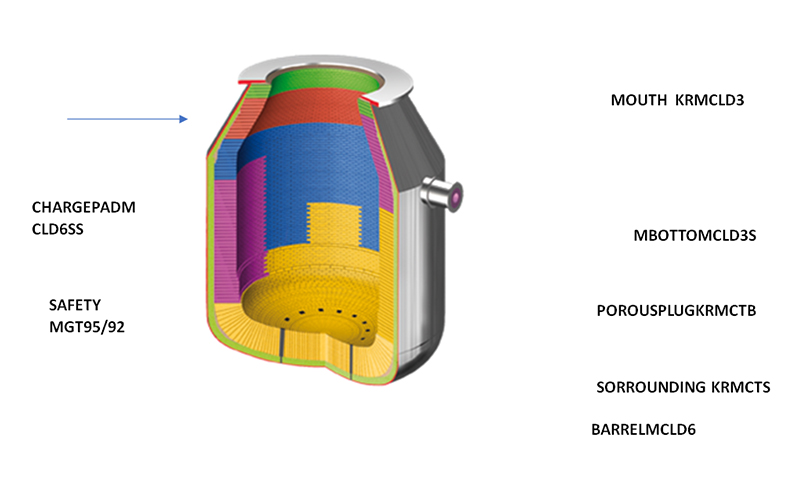
3.3 Steel Ladle Refractories
Steel ladles transport molten steel between processes.
Typical lining structure:
- Working layer
- Permanent layer
- Insulation layer
Materials:
- Alumina-magnesia castables
- Alumina-carbon bricks
- Spinel-forming castables
Requirements:
- High purity (low inclusion contamination)
- Slag penetration resistance
- Thermal insulation performance
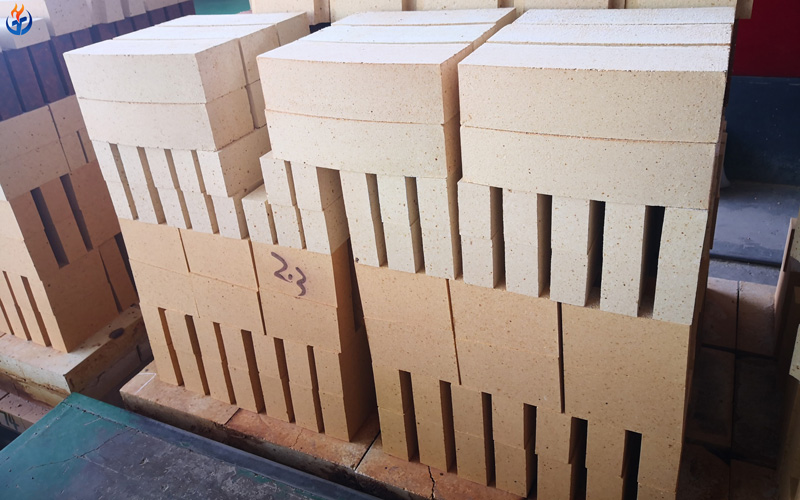
Reheating Furnace and Continuous Casting Refractories
Reheating furnaces are used to heat steel billets before rolling.
4.1 Furnace Roof and Walls
- Materials:
- High-alumina bricks
- Insulating bricks
- Functions:
- Heat retention
- Energy efficiency improvement
4.2 Burners and Flame Zones
- Materials:
- Silicon carbide refractories
- Corundum-based castables
- Requirements:
- Flame erosion resistance
- Thermal shock stability
4.3 Tundish Systems
Tundish is a key component in continuous casting.
- Materials:
- Alumina castables
- Magnesia-based coatings
- Functions:
- Flow control
- Steel purity improvement
Functional Requirements of Steel Plants Refractory Materials
To perform effectively, steel plants refractory materials must meet strict technical requirements:
5.1 Thermal Performance
- High refractoriness (>1600°C in most cases)
- Low thermal conductivity (for insulation layers)
- Excellent thermal shock resistance
5.2 Mechanical Strength
- Resistance to abrasion from solid burden
- High compressive strength under load
- Stability under thermal expansion stress
5.3 Chemical Stability
- Resistance to acidic and basic slags
- Anti-oxidation performance (especially for carbon-based refractories)
- Low chemical reactivity with molten steel
5.4 Operational Durability
- Long service life under continuous operation
- Easy maintenance and repair capability
- Compatibility with modern furnace automation systems
Trends in Modern Refractory Development for Steel Plants
The development of steel plants refractory materials is evolving rapidly due to technological innovation and environmental requirements.
6.1 Low Carbon and Energy Saving Materials
- Reduced carbon footprint in steelmaking
- Improved insulation efficiency
- Lower heat loss designs
6.2 Nano-Modified Refractories
- Enhanced microstructure stability
- Improved corrosion resistance
- Longer service life
6.3 Prefabricated Refractory Blocks
- Faster installation
- Reduced downtime during maintenance
- Improved dimensional accuracy
6.4 Recycling and Sustainability
- Recycling of spent refractories
- Reduction of industrial waste
- Circular economy integration in metallurgy
Conclusion
Steel plants refractory materials are essential components in modern metallurgical engineering. They ensure safe, efficient, and continuous operation of high-temperature equipment across blast furnaces, steelmaking converters, ladles, and reheating systems.
By selecting appropriate refractory types—acidic, basic, or neutral—and matching them with specific furnace zones, steel producers can significantly improve production efficiency, reduce energy consumption, and extend equipment lifespan.
As steelmaking technology advances, refractory materials will continue to evolve toward higher performance, sustainability, and intelligent material design, reinforcing their critical role in the global steel industry.