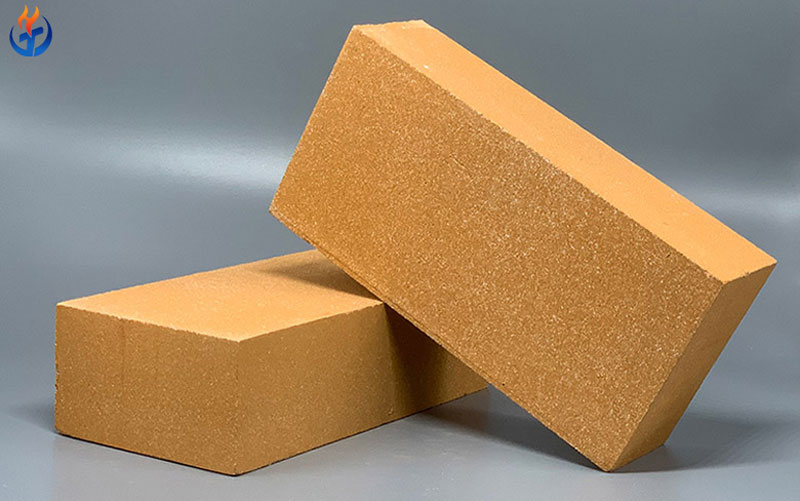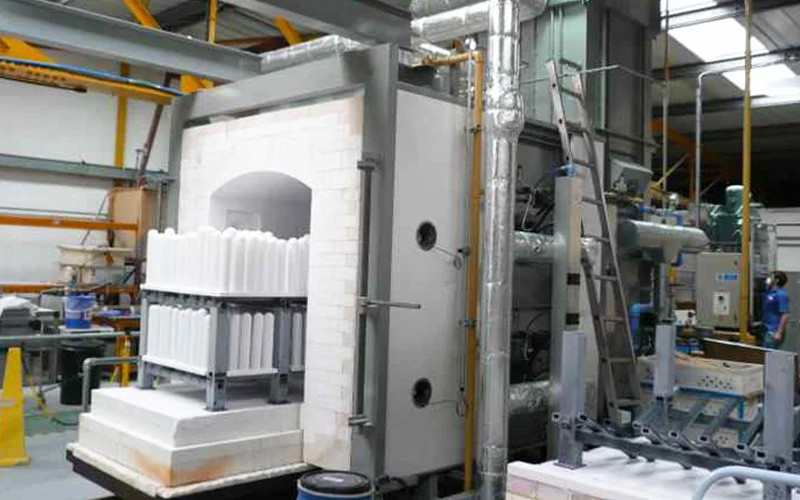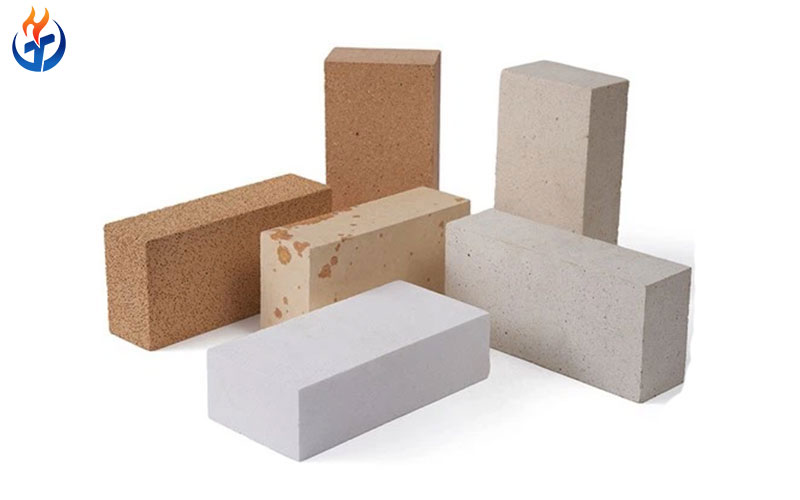
High alumina bricks are important refractory materials used in cement kiln systems where high temperature, thermal shock, abrasion, alkali attack, and mechanical stress can occur simultaneously. However, not all high alumina bricks are designed for the same working conditions. Different grades and functional types are selected according to alumina content, bonding method, thermal stability, wear resistance, load-bearing performance, and the specific position within the kiln system.
For cement plants, understanding the main types of high alumina bricks is useful when selecting refractory linings for the preheater, calciner, transition zone, kiln inlet, and other high-temperature areas. In practice, high alumina bricks are generally classified from two perspectives: their alumina grade and their functional design.
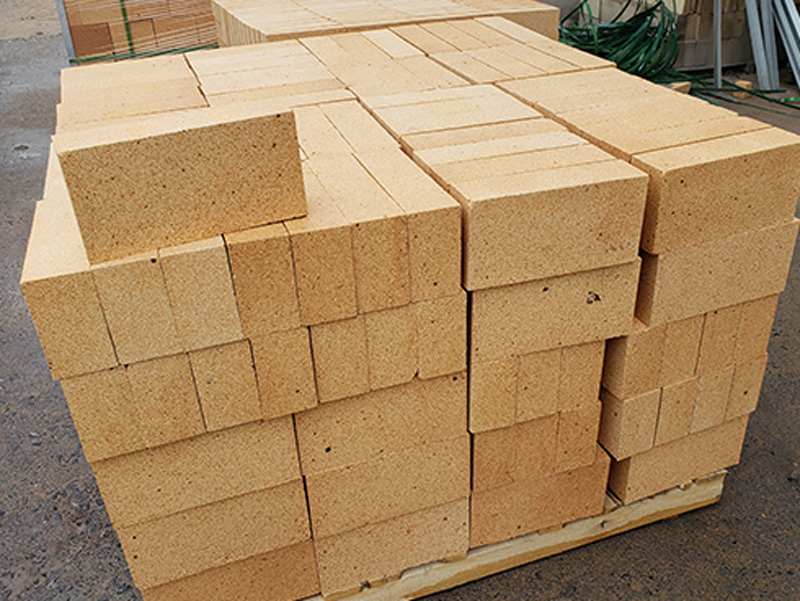
1. High Alumina Bricks Classified by Al₂O₃ Content
One of the basic ways to classify high alumina bricks is according to their Al₂O₃ content. Under the GB/T 2988 classification system, high alumina refractory bricks are commonly divided into several grades, including LZ-55, LZ-65, LZ-75, and LZ-80.
The higher the alumina content, the greater the potential resistance to high temperature and certain chemical and mechanical stresses. However, a higher Al₂O₃ content does not automatically mean that a brick is the best choice for every cement kiln position. Actual selection should consider the complete operating environment.
LZ-55 High Alumina Brick
LZ-55 high alumina brick generally contains 55% or more Al₂O₃. It represents a relatively economical grade within the high alumina brick category and can be used in general industrial furnaces and applications where extremely high alumina content is not required.
Its refractory performance is suitable for moderately demanding thermal environments. However, for critical cement kiln zones exposed to severe thermal shock, abrasion, or chemical attack, higher-grade or specially designed high alumina bricks may be more appropriate.
LZ-65 High Alumina Brick
LZ-65 generally contains at least 65% Al₂O₃ and provides a higher level of refractoriness and high-temperature performance than lower-alumina grades.
This grade can be considered for certain cement kiln transition areas and heating equipment, particularly when the lining must withstand elevated temperatures while maintaining adequate mechanical strength.
In cement production, LZ-65 and higher grades are more relevant to demanding kiln applications than general-purpose high alumina bricks.
LZ-75 High Alumina Brick
LZ-75 contains approximately 75% or more Al₂O₃ and is designed for applications requiring stronger high-temperature resistance.
This type of high alumina brick can be used in high-temperature industrial equipment such as hot-blast furnaces, lime kilns, and selected cement kiln areas. Its relatively high alumina content provides good refractoriness and resistance to thermal and mechanical stresses.
For cement kiln applications, however, the chemical environment must also be considered. A brick with high alumina content may still require additional functional properties when exposed to strong alkali attack or repeated thermal cycling.
LZ-80 High Alumina Brick
LZ-80 is a high-alumina grade with an Al₂O₃ content of approximately 80% or more. It offers very high refractoriness and is generally intended for more demanding high-temperature applications.
Although LZ-80 provides excellent high-temperature capability, it is not necessarily used throughout a cement rotary kiln. Cement kiln linings are normally designed according to individual zones, and specialized refractory products can offer a better balance between thermal shock resistance, abrasion resistance, chemical resistance, and cost.
2. Anti-Spalling High Alumina Bricks
Anti-spalling high alumina bricks are among the important functional refractory products used in cement kiln systems.
Cement kilns frequently experience temperature fluctuations during start-up, shutdown, production changes, and abnormal operating conditions. These repeated thermal cycles can generate stresses inside refractory linings and eventually cause cracking or spalling.
Anti-spalling high alumina bricks are designed to improve resistance to these conditions. Typical products may contain more than 70% Al₂O₃, while zirconia may also be introduced to improve thermal shock resistance and structural stability.
Depending on the product grade, important performance indicators can include apparent porosity, cold crushing strength, refractoriness under load, and thermal shock resistance.
These bricks are particularly suitable for areas such as the transition zone, safety zone, and selected calcining areas where thermal cycling is significant.
Why Is Spalling Resistance Important?
A refractory lining can gradually lose thickness when pieces of the brick surface break away. Once significant spalling occurs, the remaining lining may become thinner and less capable of protecting the kiln shell.
Anti-spalling high alumina bricks therefore focus not only on high-temperature resistance but also on maintaining structural integrity during repeated heating and cooling cycles.
For cement plants with frequent kiln shutdowns or unstable operating conditions, thermal shock resistance can be an important selection criterion.
3. Phosphate-Bonded High Alumina Bricks
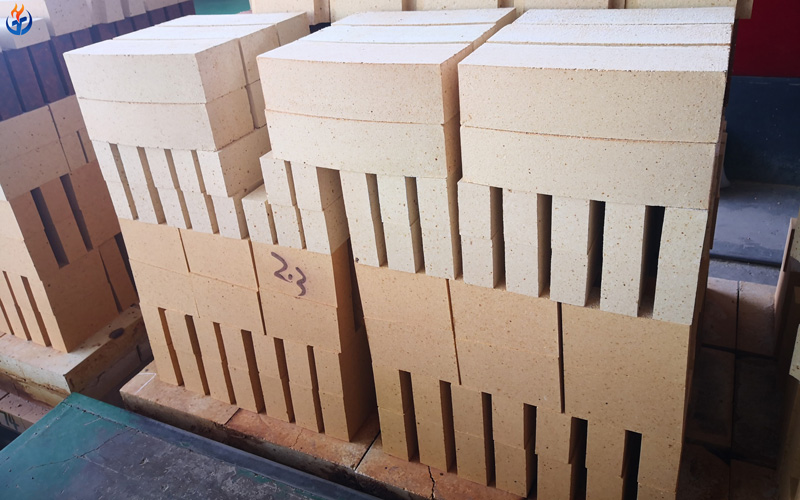
Phosphate-bonded high alumina bricks use a phosphate bonding system to achieve specific combinations of strength, wear resistance, and high-temperature performance.
These bricks are commonly considered for cement kiln areas subjected to mechanical abrasion and material flow. Depending on the formulation, Al₂O₃ content can be around 75% or higher, while specialized wear-resistant grades may contain even higher alumina levels.
Phosphate-bonded high alumina bricks can provide good mechanical strength and resistance to abrasion. Their properties make them suitable for areas where refractory materials are exposed to continuous movement of clinker, raw meal, or other abrasive materials.
Typical application areas include transition zones and kiln inlet or outlet sections where mechanical wear can be a significant concern.
4. Phosphate-Bonded Wear-Resistant High Alumina Bricks
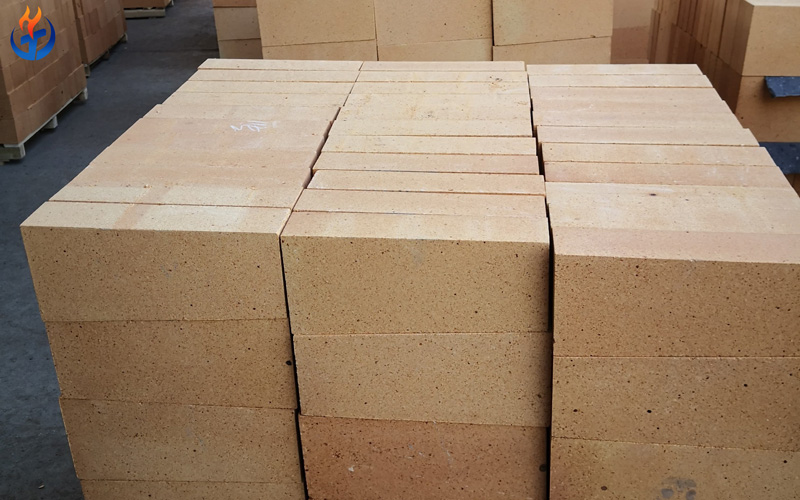
Phosphate-bonded wear-resistant high alumina bricks are a more specialized category developed for areas where abrasion resistance is particularly important.
During cement production, refractory linings are exposed not only to high temperatures but also to mechanical impact and friction from moving materials. If abrasion resistance is insufficient, the refractory lining can become thinner relatively quickly.
Wear-resistant grades may be formulated with high alumina raw materials and additional components designed to improve mechanical durability. Some product designs can also incorporate steel fibers or silicon carbide depending on the intended application.
These bricks are commonly considered for transition zones, kiln mouths, and other areas experiencing strong mechanical wear and material scouring.
When selecting this type of brick, buyers should evaluate cold crushing strength, abrasion resistance, thermal stability, refractoriness under load, and compatibility with actual kiln operating conditions rather than focusing on Al₂O₃ content alone.
5. Alkali-Resistant Bricks
Alkali-resistant bricks are another important refractory category in cement kiln systems, especially in the preheater and calciner sections.
Unlike conventional high alumina bricks, alkali-resistant bricks are not necessarily characterized by very high Al₂O₃ content. In fact, some high-strength alkali-resistant products use relatively low alumina compositions because the material design is focused on resistance to alkali vapor and chemical interaction.
Cement raw materials and fuels can introduce alkali compounds into the kiln system. During operation, alkali vapors may circulate through the preheater and calciner. These compounds can react with refractory materials and contribute to structural deterioration.
Therefore, the refractory material used in these zones needs to have suitable alkali resistance rather than simply the highest possible alumina content.
High-strength alkali-resistant bricks can be considered for preheaters, calciners, and other sections exposed to alkali-containing atmospheres.
6. Low-Creep High Alumina Bricks
Low-creep high alumina bricks are designed for applications where dimensional stability under long-term high-temperature loading is important.
Cement kiln refractories may remain under mechanical and thermal loads for long periods. If the refractory material deforms excessively at elevated temperature, the lining can lose its designed geometry and service performance.
Low-creep high alumina bricks are therefore developed with a microstructure and raw material composition intended to reduce permanent deformation during high-temperature operation.
These products may be considered for calciner areas, kiln tail sections, transition areas, and other locations where high temperature and long-term loading occur.
For these applications, refractoriness under load and creep behavior can be more meaningful than simply comparing nominal alumina percentages.
7. How High Alumina Bricks Are Used in Different Cement Kiln Zones
A key point for cement plants is that high alumina bricks should not normally be treated as a universal refractory material for the entire rotary kiln.
Different kiln zones have different temperatures, chemical environments, mechanical stresses, and thermal cycling conditions.
Preheater and Calciner
The preheater and calciner typically operate at lower temperatures than the main burning zone but can experience significant alkali attack, thermal cycling, dust erosion, and chemical reactions.
Alkali-resistant bricks and selected anti-spalling high alumina products may be considered according to the specific operating conditions.
Transition Zone
The transition zone is one of the most demanding areas for refractory selection. Temperatures can be very high, while thermal shock, mechanical stress, abrasion, and chemical attack may occur at the same time.
Anti-spalling high alumina bricks, phosphate-bonded high alumina bricks, and other specialized refractory materials may be used depending on the kiln design and operating conditions.
Thermal shock resistance is particularly important in this area because repeated temperature changes can accelerate cracking and spalling.
Kiln Inlet and Outlet Areas
The kiln inlet and outlet areas may experience strong material movement, abrasion, dust erosion, and thermal fluctuations.
Phosphate-bonded wear-resistant high alumina bricks can be considered where mechanical wear is a major concern. Other refractory solutions, including castables, may also be used depending on the lining structure and maintenance requirements.
Kiln Tail
At the kiln tail and connecting areas, castable refractory materials are often used for specific structural and sealing applications. High-alumina low-cement castables can provide a practical solution where monolithic construction is preferred.
The choice between bricks and castables depends on the geometry, installation method, operating temperature, maintenance strategy, and required mechanical performance.
8. High Alumina Content Is Not the Only Selection Criterion
When purchasing high alumina bricks for a cement kiln, it can be tempting to compare products primarily according to Al₂O₃ content. However, this approach can result in an unsuitable refractory selection.
For example, a brick with very high alumina content may provide excellent refractoriness but may not offer the required resistance to thermal shock or alkali attack.
A more comprehensive evaluation should include:
- Al₂O₃ content
- Apparent porosity
- Bulk density
- Cold crushing strength
- Refractoriness under load
- Thermal shock resistance
- Abrasion resistance
- Alkali resistance
- Creep resistance
- Dimensional stability
- Chemical compatibility with cement clinker and kiln atmosphere
The actual temperature profile and operating conditions of each kiln zone should also be considered.
Conclusion
The main types of high alumina bricks used in cement kiln systems can be classified according to both alumina grade and functional performance. Common alumina grades include LZ-55, LZ-65, LZ-75, and LZ-80, while functional categories include anti-spalling high alumina bricks, phosphate-bonded high alumina bricks, phosphate-bonded wear-resistant high alumina bricks, alkali-resistant bricks, and low-creep high alumina bricks.
Among these products, different types address different operating challenges. Anti-spalling bricks are suitable for areas with severe thermal cycling, phosphate-bonded and wear-resistant grades are useful where abrasion and material impact are significant, while alkali-resistant bricks are designed for alkali-rich sections such as preheaters and calciners. Low-creep products focus on dimensional stability under prolonged high-temperature loading.
Therefore, the best high alumina brick for a cement kiln should not be selected simply by choosing the highest Al₂O₃ grade. The refractory lining should be designed according to the temperature, chemical atmosphere, thermal shock, abrasion, mechanical load, and operating conditions of each kiln section. A zone-specific refractory selection can help improve lining durability, reduce unexpected maintenance, and support more stable cement kiln operation.