In the steelmaking industry, ladle nozzles play a critical role in ensuring efficient and precise control of molten steel flow during continuous casting. These components, which include upper nozzles, lower or collector nozzles, and slide gate plates, are made from high-quality refractory materials that withstand the extreme temperatures and corrosive nature of molten metal. This article provides a detailed overview of ladle nozzle types, their components, materials, and the benefits they offer in modern steel production.
What is a Ladle Nozzle?
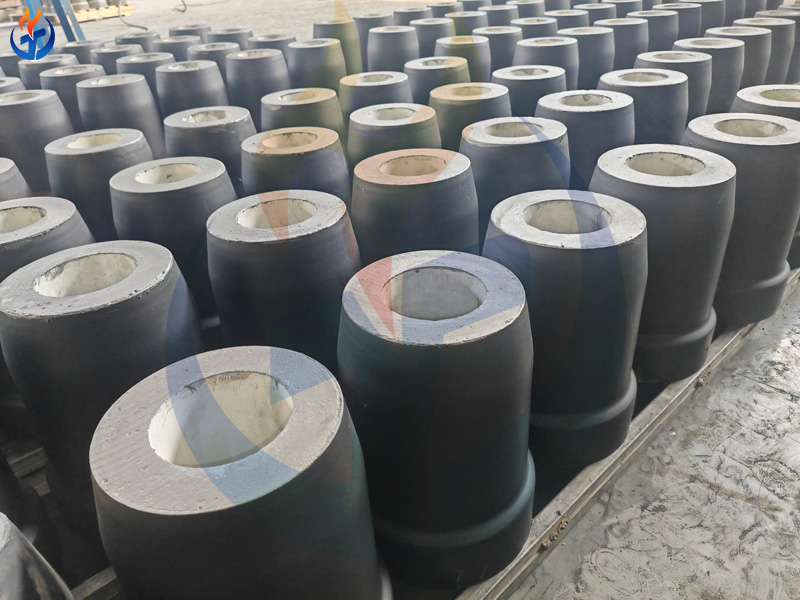
A ladle nozzle is a type of refractory product used in the continuous casting of steel. It is an essential component of a steel casting slide gate system, designed to control the flow of molten steel from the ladle to the tundish or mold.
Ladle nozzles are produced using high-purity alumina, corundum, or zirconia-based materials, and they undergo high-pressure molding processes to create a strong, durable structure. The final product exhibits excellent thermal shock resistance, corrosion resistance, and long service life.
These nozzles are an integral part of ladle linings and are replaceable, allowing for efficient maintenance during steel production campaigns. Their performance significantly affects the lifespan of ladle bottoms and overall casting efficiency, making the selection of appropriate ladle nozzle types a critical decision for steelmakers.
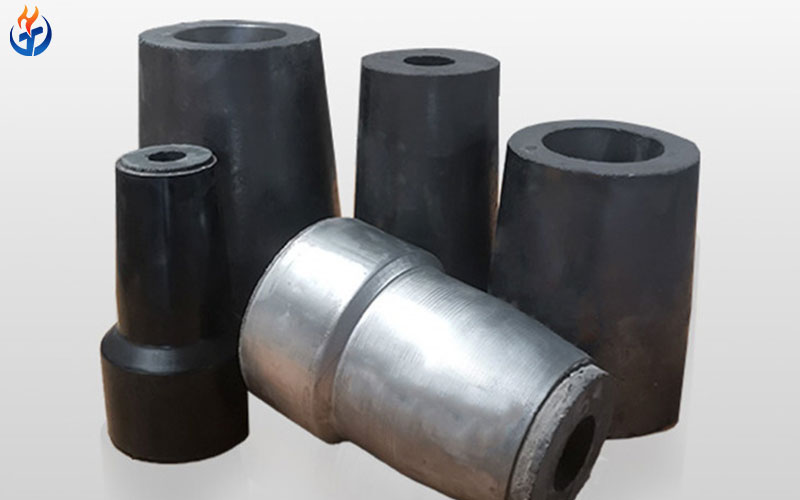
Key Components of Ladle Nozzles
Ladle nozzles consist of several critical components, each designed to perform a specific function in controlling the flow of molten steel:
1. Upper Nozzle (Inner Nozzle)
The upper nozzle, also known as the inner nozzle, is placed in the well block of the ladle lining. It is typically made of high-alumina, zirconia, or zirconia-alumina-carbon composites. These materials provide superior corrosion resistance and thermal stability.
Function: The upper nozzle ensures smooth flow from the ladle and directs molten steel toward the slide gate system. Its high-strength refractory construction minimizes erosion caused by high-temperature metal.
Material Composition:
Alumina (Al₂O₃): 70–85%
Zirconia (ZrO₂): 2–2.5%
Carbon (C): ≤4%
Bulk Density: ≥3.0 g/cm³
Cold Crushing Strength: ≥100–150 MPa
2. Lower Nozzle (Collector Nozzle)
The lower nozzle, or collector nozzle, is installed beneath the slide gate system. Its primary role is to guide the steel stream into the ladle shroud or tundish while maintaining controlled flow.
Material Types: Lower nozzles are commonly made from aluminum-carbon or zirconia-carbon composites. The high-purity raw materials, such as sintered corundum and super-grade bauxite, are mixed with flake graphite to enhance oxidation resistance. The nozzles are then molded under high pressure using advanced resin bonding technology.
Advantages:
High strength and impact resistance
Excellent thermal stability
Corrosion and oxidation resistance
Long service life
Typical Material Composition:
| Item | AL₂O₃% | MgO% | C% | Fe₂O₃% | Bulk Density (g/cm³) | Apparent Porosity (%) | Cold Crushing Strength (MPa) |
|---|---|---|---|---|---|---|---|
| Al-MgO | ≥65 | ≥30 | ≤3.0 | ≤1.0 | ≥3.10 | ≤8 | ≥120 |
| Corundum | ≥80 | — | ≤3.0 | ≤1.0 | ≥3.00 | ≤10 | ≥120 |
3. Slide Gate Plates (Nozzle Plates)
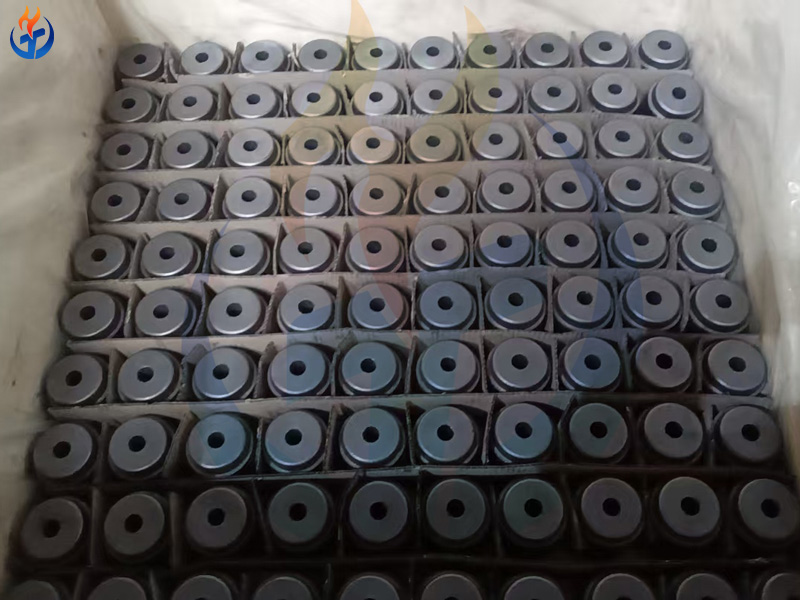
Slide gate plates are refractory components that regulate the opening and closing of the steel flow. These plates allow precise throttling and flow control during continuous casting.
Key Benefits:
Ensure smooth and controlled metal flow
Reduce turbulence and splashing
Minimize clogging and wear in the nozzle system
4. Tundish Nozzles / Submerged Entry Nozzles (SEN)
These nozzles are used to guide the steel from the ladle into the mold while protecting the metal stream from oxidation. High-purity zirconia is typically used to manufacture SENs for enhanced corrosion resistance and thermal stability.
Function:
Protect molten steel from oxidation
Control the flow pattern into the mold
Reduce turbulence and prevent nozzle blockage
5. Ladle Nozzle Filling Compounds
To ensure a free opening and prevent clogging, ladle nozzle filling compounds are used. These are non-stick refractory materials, usually based on chromite, zirconia, or silica. They maintain nozzle integrity and improve flow consistency.
Types of Ladle Nozzles
Understanding the different ladle nozzle types is essential for selecting the right product for your casting operations.
1. Alumina-Carbon (Al₂O₃-C) Nozzles
Alumina-carbon nozzles are widely used in continuous casting due to their excellent erosion resistance, thermal shock resistance, and long service life. These nozzles are particularly effective in steelmaking processes involving high temperatures and aggressive molten metal.
Applications:
BOF (Basic Oxygen Furnace) casting
EAF (Electric Arc Furnace) casting
Continuous casting of steel
Advantages:
High thermal stability
Excellent corrosion resistance
Precise flow control
2. Zirconia-Carbon (ZrO₂-C) Nozzles
Zirconia-carbon nozzles offer superior wear resistance and thermal shock performance compared to traditional alumina-carbon nozzles. They are suitable for steel grades that are highly corrosive or have a high content of alloying elements.
Applications:
Stainless steel casting
Alloy steel casting
High-temperature molten metal handling
Advantages:
Outstanding resistance to chemical attack
Long operational lifespan
Reduced nozzle blockage
3. Aluminum-Magnesia (Al₂O₃-MgO) Nozzles
These nozzles are designed for operations that demand a balance of chemical stability and mechanical strength. The addition of magnesia improves resistance to oxidation and thermal cracking.
Applications:
Low-alloy steel casting
Ladle operations requiring thermal shock tolerance
Advantages:
Good thermal shock resistance
Adequate erosion resistance
Reliable flow control
Common Causes of Ladle Nozzle Clogging
Despite high-quality materials and optimized designs, nozzle clogging can still occur due to several factors:
Formation of Slag or Oxides: Oxidation of molten steel can create solid inclusions that block the nozzle.
Improper Nozzle Temperature: Nozzles that are too cold can cause premature solidification of steel.
Inconsistent Flow Rate: Sudden surges in flow can disturb the nozzle lining, leading to blockage.
Contaminants in Steel: Impurities in molten steel, such as non-metallic inclusions, increase the risk of clogging.
Material Wear: Prolonged use leads to erosion and uneven internal surfaces, which promote blockages.
Benefits of Advanced Ladle Nozzles
Modern ladle nozzles, developed using advanced refractory technology and high-pressure molding, provide several advantages over traditional designs:
Enhanced Thermal Shock Resistance: Withstand rapid temperature changes without cracking.
Improved Corrosion Resistance: High-purity materials prevent chemical attack from molten steel.
Extended Service Life: Optimized material compaction ensures longer nozzle campaigns.
Precise Flow Control: Consistent bore dimensions and high-quality slide gate plates allow for stable casting conditions.
Cost Efficiency: Longer life and reduced maintenance requirements lower overall operational costs.
Conclusion
Selecting the right ladle nozzle types is crucial for efficient steel production and continuous casting. From alumina-carbon to zirconia-carbon and aluminum-magnesia nozzles, each type offers specific advantages suited to particular steel grades and operating conditions. By using high-quality materials, precise manufacturing processes, and best operational practices, steelmakers can minimize nozzle clogging, extend service life, and improve overall casting performance.
With decades of expertise, advanced refractory technology, and optimized designs, modern ladle nozzles provide dimensionally accurate, durable, and high-performance solutions to meet the demanding requirements of today’s steel industry.
For inquiries or to learn more about our range of ladle nozzles for steelmaking, please contact our team or visit our product catalog.