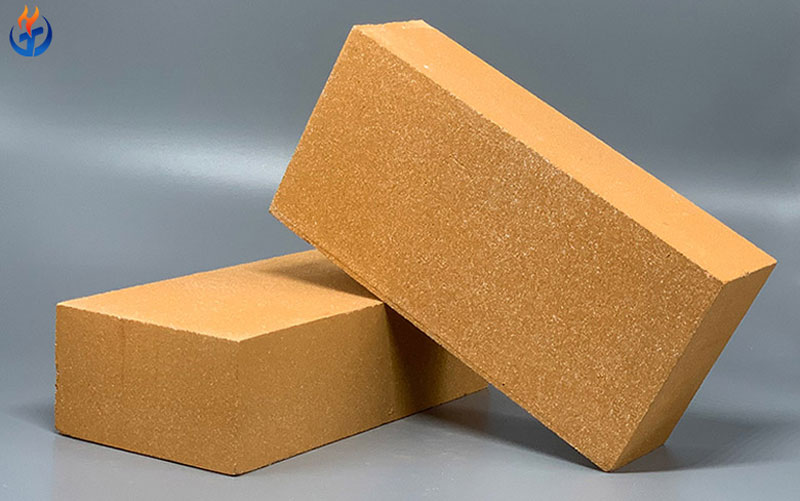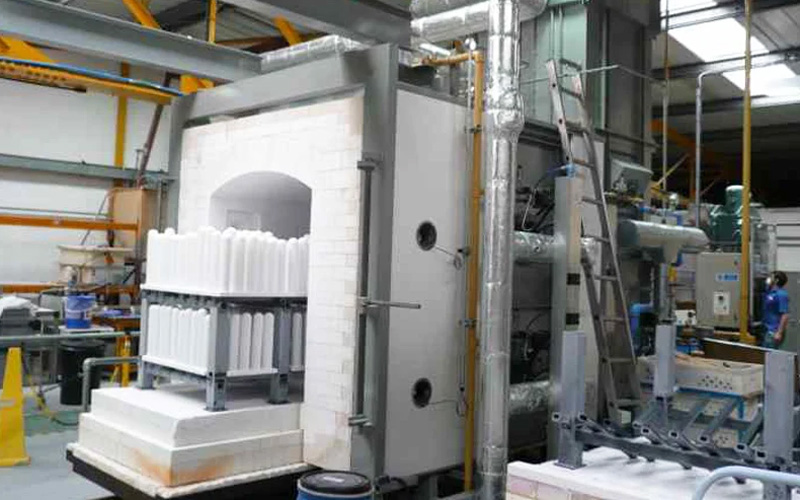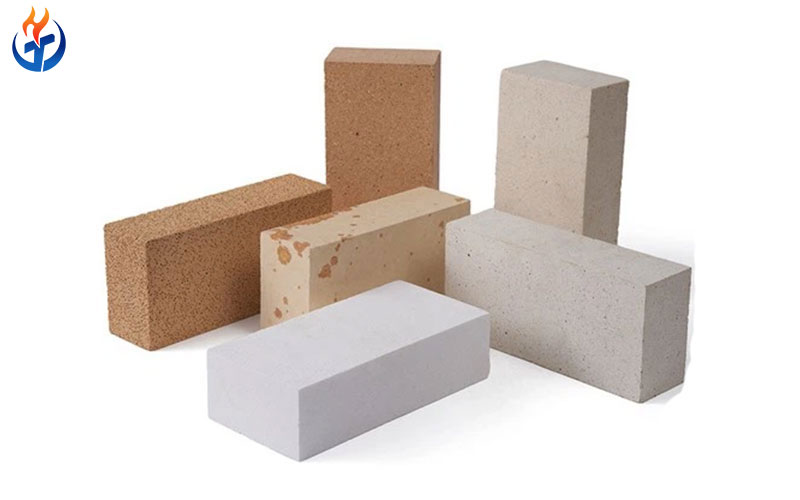
Refractory castables are widely used in industrial furnaces, kilns, boilers, and other high-temperature equipment. They provide flexible installation options, good structural integrity, and the ability to form linings with complex shapes. Depending on their density, thermal conductivity, and service requirements, refractory castables can generally be classified into dense castable refractory and lightweight refractory castable. Although both materials are designed for high-temperature applications, they differ significantly in their physical properties, raw materials, thermal performance, and suitable operating environments.
Understanding the differences between dense castable refractory and lightweight refractory castable helps industrial users select appropriate lining materials, improve furnace efficiency, and extend the service life of thermal equipment.
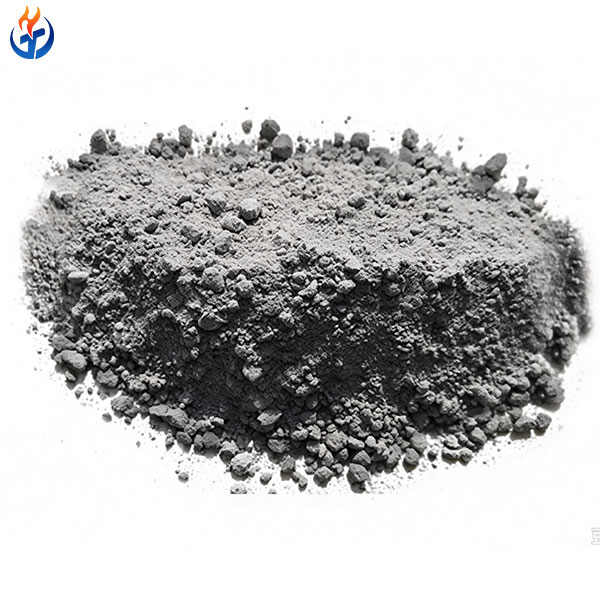
1. Classification of Commonly Used Refractory Castables
Refractory castables can be classified according to their raw materials, performance characteristics, density, bonding systems, and application environments. Each category is designed to meet specific operating conditions.
By performance characteristics: Common types include high-strength wear-resistant castables, high-temperature-resistant castables, low-cement castables, steel fiber reinforced castables, and acid-resistant castables. These materials are selected according to requirements such as mechanical strength, abrasion resistance, and chemical stability.
By raw materials: Common varieties include clay castables, high alumina castables, silica castables, mullite castables, corundum castables, and silicon carbide castables. Their performance depends on the chemical composition and properties of the aggregates and fine powders.
By industrial application: Different formulations are developed for steel ladles, blast furnaces, cement rotary kilns, aluminum melting furnaces, boilers, and incinerators. For example, silicon carbide-containing castables may be used in areas exposed to abrasion, while high-alumina formulations are suitable for many high-temperature furnace linings.
By bulk density: Refractory castables are commonly divided into dense castables and lightweight insulating castables. This classification is particularly important when balancing mechanical durability against thermal insulation.
By bonding system: Cement-bonded, low-cement, and chemically bonded castables are selected according to installation requirements, curing conditions, and service temperatures.
By chemical resistance: Acid-resistant, neutral, and alkali-resistant formulations are used in environments with different chemical exposure conditions.
Among these categories, dense and lightweight castables are especially important because they perform different functions within industrial thermal systems.
2. What Is Dense Castable Refractory?
Dense castable refractory is a monolithic refractory material formulated with relatively high-density aggregates, fine powders, and suitable binders. After mixing with the specified amount of water and completing installation, curing, and drying, it forms a strong refractory lining capable of withstanding demanding operating conditions.
Typical raw materials include bauxite, high-alumina aggregates, corundum, and silicon carbide, depending on the required performance. The formulation determines its refractoriness, mechanical strength, abrasion resistance, and resistance to chemical attack.
Dense castables are generally characterized by high bulk density, relatively low porosity, and good structural strength. They are suitable for furnace zones exposed to direct flame, mechanical wear, molten materials, or frequent material movement. Depending on their composition, they can also provide good resistance to thermal shock and slag penetration.
Common applications include cement kiln linings, steelmaking equipment, furnace hearths, aluminum melting furnaces, and industrial boiler combustion chambers. However, the appropriate grade must be selected according to the actual temperature, atmosphere, abrasion, and chemical conditions.
3. What Is Lightweight Refractory Castable?
Lightweight refractory castable is an insulating refractory material designed to reduce heat transfer while maintaining sufficient structural integrity for its intended application. It typically contains lightweight aggregates or porous materials that reduce bulk density and thermal conductivity.
Common ingredients include expanded perlite, vermiculite, lightweight clay aggregates, and alumina hollow spheres. The exact composition varies according to the required operating temperature, insulation performance, and mechanical strength.
Compared with dense castables, lightweight castables generally have higher porosity, lower bulk density, and lower thermal conductivity. These characteristics help reduce heat loss through furnace walls and other thermal equipment.
Lightweight refractory castables are commonly used in furnace insulation layers, kiln back linings, heat-treatment equipment, and selected boiler applications. They can reduce the external surface temperature of equipment and help improve energy efficiency.
However, lightweight castables usually have lower compressive strength and abrasion resistance than dense formulations. They are therefore less suitable for zones exposed to severe mechanical impact, heavy loads, or aggressive molten slag unless a specifically engineered grade can meet those requirements.
4. Key Differences Between Dense and Lightweight Refractory Castables
Although both materials are used in high-temperature environments, their performance characteristics differ in several important ways.
4.1 Bulk Density and Porosity
Bulk density is one of the most obvious differences. Dense refractory castables commonly have a bulk density above approximately 1.8 g/cm³, while lightweight insulating castables often have a density below approximately 1.6 g/cm³. These values are general reference ranges rather than universal classification limits, and actual specifications vary by product.
Dense castables use compact aggregates and a relatively dense matrix to provide structural strength. Lightweight castables incorporate porous or low-density aggregates to reduce material weight and improve insulation.
4.2 Thermal Conductivity and Insulation Performance
Dense castables generally have higher thermal conductivity than lightweight insulating castables of comparable service-temperature suitability. Their primary purpose is often to resist heat, wear, and chemical attack rather than minimize heat transfer.
Lightweight castables have lower thermal conductivity because their porous structure restricts heat transfer. They are particularly useful where reducing furnace heat loss, lowering shell temperatures, and improving thermal efficiency are priorities.
4.3 Mechanical Strength and Wear Resistance
Dense castables usually provide higher compressive strength and better resistance to abrasion and mechanical damage. These properties make them suitable for working linings that contact moving materials or experience significant operational stress.
Lightweight castables prioritize insulation over load-bearing capacity. Their strength is generally lower, so they are more appropriate for protected insulation layers or applications with limited mechanical loading.
4.4 Raw Materials and Formulation
Dense castables commonly use high-density refractory aggregates such as bauxite, corundum, and selected silicon carbide materials. Lightweight formulations instead incorporate porous aggregates, hollow spheres, or other lightweight insulating components.
Binder selection and dosage also depend on the formulation. Neither category necessarily requires a universally higher binder content; the appropriate amount is determined by the aggregate characteristics, installation method, and required performance.
4.5 Water Demand and Construction Requirements
Water demand varies with aggregate porosity, particle size distribution, binder system, and product formulation. Lightweight aggregates may absorb more water, but the required mixing quantity must follow the manufacturer’s technical instructions rather than a general assumption.
Both types require appropriate mixing, placement, curing, and controlled drying. Excess water can increase porosity, reduce strength, and contribute to cracking or damage during heating. Lightweight castables may require additional care to prevent damage to their more fragile aggregate structure.
4.6 Service Environment and Temperature Resistance
Dense castables are often used in demanding working zones exposed to abrasion, chemical attack, and high mechanical loads. Lightweight castables are primarily selected for insulation layers where minimizing heat transfer is essential.
Neither density alone nor insulation performance determines maximum service temperature. The rated temperature, permanent linear change, chemical compatibility, thermal cycling resistance, and installation conditions must all be considered.

5. How to Choose the Right Refractory Castable
Selecting a suitable refractory castable starts with identifying the function of the lining and the actual operating environment.
For working linings exposed to severe abrasion, molten materials, or chemical attack, a dense castable with suitable strength and corrosion resistance is generally more appropriate. For backup linings and insulation layers, a lightweight castable can help reduce heat loss and improve energy efficiency.
In some industrial furnaces, combining both materials is an effective solution. A dense hot-face lining provides resistance to wear and chemical exposure, while a lightweight insulating layer behind it reduces heat transfer through the furnace structure. The thickness and properties of each layer should be designed according to operating conditions and equipment requirements.
Before purchasing, consider the maximum operating temperature, bulk density, thermal conductivity, compressive strength, chemical composition, installation method, and drying schedule. It is also important to confirm compatibility with the furnace atmosphere and the materials being processed.
Conclusion
Dense castable refractory and lightweight refractory castable serve different but complementary purposes in industrial high-temperature equipment. Dense castables emphasize mechanical strength, abrasion resistance, and durability, while lightweight castables focus on thermal insulation, reduced weight, and lower heat loss.
Choosing the right material requires more than comparing density. Industrial users should evaluate operating temperature, chemical exposure, mechanical stress, insulation requirements, and installation conditions together. With an appropriate material selection and correct construction, refractory castables can help improve furnace performance, reduce energy consumption, and support reliable long-term operation.