In aluminum processing, furnace lining selection has a direct impact on service life, operating safety, thermal efficiency, maintenance frequency, and overall production cost. Among all refractory materials used in aluminum melting systems, castables play a vital role because they offer flexible construction, strong integrity, and the ability to adapt to complex furnace structures. However, not every castable is suitable for this demanding environment. If the wrong refractory is selected, the lining may suffer from aluminum penetration, chemical attack, cracking, spalling, and premature failure.
That is why choosing the right refractory castables for aluminum melting furnace is not just a purchasing decision. It is a technical decision that affects the reliability of the whole furnace system.
In most cases, high alumina castable is the preferred solution for aluminum melting furnaces. Common grades such as LZ-75 and LZ-80, with an Al2O3 content of approximately 75% to 80%, are widely used in the industry. For critical working zones exposed to more severe attack, corundum castable can offer even stronger resistance and longer service life.
Now let’s find out how to choose castable for aluminum melting furnace applications, why high alumina castables are commonly recommended, what properties matter most, and how to select different materials for different furnace sections.
Why Castable Selection Matters in Aluminum Melting Furnaces
An aluminum melting furnace operates under conditions that may seem moderate in temperature compared with steelmaking furnaces, but the working environment is still highly challenging for refractories. Typical operating temperatures are often around 700°C to 900°C, yet the furnace lining is exposed to several damaging factors at the same time.
First, molten aluminum is chemically active. It can react with certain refractory components, especially materials with higher silica content, leading to low-melting compounds and accelerated lining erosion. Second, the furnace often experiences repeated charging and tapping, which causes temperature fluctuation and thermal shock. Third, some areas such as the tapping spout, molten pool, and flow channels face constant mechanical wear and liquid metal scouring. Fourth, poor refractory selection can increase the risk of leakage, downtime, and costly repairs.
Because of these conditions, the refractory castable must combine chemical resistance, high-temperature stability, mechanical strength, thermal shock resistance, and good installation performance. A generic castable may not survive for long in such a furnace. A properly selected one can significantly improve furnace campaign life and reduce maintenance costs.
Why High Alumina Castable Is Commonly Chosen
When choosing refractory castables for aluminum melting furnace applications, high alumina refractory castables are often the preferred option. Their composition and performance make them suitable for molten aluminum service.
Strong Resistance to Molten Aluminum Attack
High alumina refractory castables resist molten aluminum corrosion and penetration better than silica-rich materials. Since molten aluminum reacts easily with excessive SiO2, low-silica castables provide better lining protection and longer service life.
Stable High-Temperature Performance
Although aluminum melting furnaces do not operate at extremely high temperatures, the lining still needs reliable strength and stability. High alumina refractory castables offer high refractoriness, good hot strength, and stable performance during long-term use.
Good Thermal Shock Resistance
Frequent charging, tapping, and temperature changes can create thermal stress in the furnace lining. High alumina refractory castables have good thermal shock resistance, which helps reduce cracking and spalling.
Convenient Construction and Maintenance
As monolithic refractories, refractory castables can be poured into complex furnace structures and form an integral lining. They are also convenient for local repair and maintenance.
Common Grades: LZ-75 and LZ-80
Among high alumina castables used in aluminum melting furnaces, LZ-75 and LZ-80 are common choices. The numbers generally indicate the approximate alumina content, with Al2O3 ranging from 75% to 80%.
LZ-75 High Alumina Castable
LZ-75 is often used in areas that require good heat resistance, structural stability, and moderate corrosion resistance, but are not in constant direct contact with molten aluminum. It offers a balanced combination of performance and cost. For many furnace wall and roof applications, LZ-75 can meet the requirements well.
Because it is more economical than higher-grade materials, it is often selected where cost-performance ratio matters.
LZ-80 High Alumina Castable
LZ-80 contains a higher percentage of alumina and usually provides stronger resistance to molten aluminum attack, better hot strength, and better overall durability in severe service. It is more suitable for critical zones such as the furnace bottom and molten bath area, where the refractory is exposed to direct contact with aluminum liquid and more intense chemical erosion.
When longer service life is required in the core working zone, LZ-80 is often a safer choice than lower-alumina grades.
When to Choose Corundum Castable
For especially severe furnace sections, corundum castable may be a better option than standard high alumina castable. Corundum-based materials have very high alumina content and excellent hardness, which gives them superior wear resistance, corrosion resistance, and hot strength.
Corundum castables are usually recommended for:
Molten pool areas with strong aluminum attack
Furnace bottoms under heavy load
Tapping spouts and outlets
Flow channels with severe scouring
Zones requiring longer service intervals
Of course, corundum castables are generally more expensive than LZ-75 or LZ-80. That is why many furnace designs use a graded approach: premium material in the most aggressive zones and more economical high alumina castable in less critical areas.
This combination can optimize both service life and total refractory cost.

How to Choose Castable for Different Furnace Parts
One of the most important points in aluminum melting furnace refractory design is that different furnace sections face different working conditions. Therefore, material selection should not be identical everywhere. A proper zoning strategy can greatly improve performance.
1. Furnace Bottom and Molten Pool Area
The furnace bottom and molten bath zone are the core working areas of the aluminum melting furnace. These sections are in direct contact with molten aluminum for long periods and often face the most severe chemical attack and penetration risk.
For these zones, the best options are usually:
LZ-80 high alumina castable
Corundum castable
These materials provide stronger resistance to molten aluminum erosion and better long-term durability. Since failure in the bottom area can cause serious safety issues and expensive downtime, it is wise to prioritize performance over initial cost in this part of the furnace.
2. Furnace Walls and Roof
The furnace walls and roof are often exposed to high temperature, combustion atmosphere, and thermal cycling, but they may not remain in constant direct contact with molten aluminum. In these sections, the material still needs good refractoriness, thermal shock resistance, and structural stability, but the chemical corrosion demand is usually lower than in the molten pool.
For these areas, LZ-75 high alumina castable is often sufficient. It provides dependable performance while maintaining a reasonable cost level. In many practical furnace linings, this is where cost-effective material selection can be achieved without sacrificing reliability.
3. Tapping Spout and Launder
The tapping outlet, metal flow spout, and connected launders are often exposed to high-velocity molten aluminum flow, repeated tapping cycles, and severe mechanical scouring. These are some of the fastest-wearing parts of the furnace system.
For these areas, it is usually better to choose:
Corundum castable
Wear-resistant high alumina castable
These materials offer improved abrasion resistance and better resistance to localized erosion. Since these zones are often maintenance hotspots, using a tougher castable here can significantly reduce repair frequency.
Key Properties to Evaluate Before Choosing a Castable
When selecting a castable for an aluminum melting furnace, buyers should look beyond the product name alone. Several technical indicators should be reviewed carefully.
Alumina Content
Higher alumina content generally means lower silica content and stronger resistance to molten aluminum attack. For aluminum melting furnace applications, castables with 75% to 80% Al2O3 are commonly preferred, while more demanding zones may need even higher alumina levels.
Bulk Density and Porosity
A castable with suitable density and low open porosity usually offers better resistance to penetration by molten aluminum and gases. Excessive porosity can allow aluminum infiltration, which may weaken the structure and shorten lining life.
Cold Crushing Strength and Hot Strength
Mechanical strength matters during installation, drying, startup, and long-term service. Stronger castables are better able to resist mechanical stress and maintain integrity under load.
Thermal Shock Resistance
Frequent temperature changes are common in aluminum melting operations. A castable with good thermal shock resistance is less likely to crack and spall during repeated heating and cooling.
Permanent Linear Change
Dimensional stability is important. Excessive shrinkage or expansion can cause cracking, joint opening, or structural instability. A well-formulated castable should show controlled permanent linear change after firing.
Resistance to Aluminum Penetration
Not all high-temperature castables behave the same way in contact with aluminum. For this reason, users should pay attention to whether the product is specifically designed or proven for molten aluminum service.
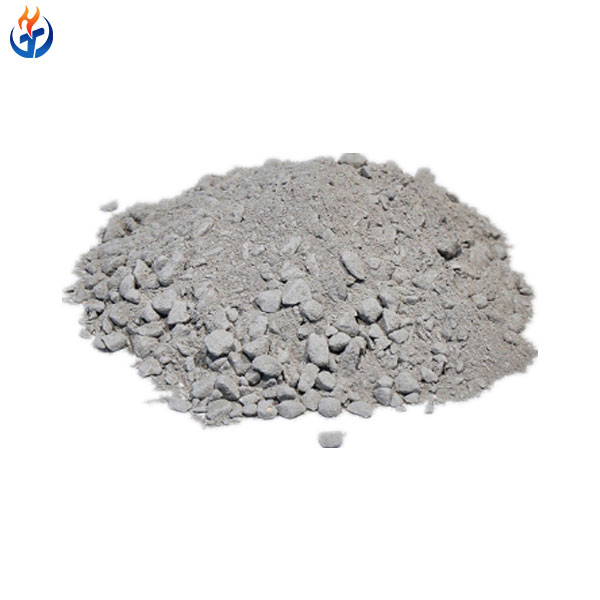
Why Low-Silica Systems Are Better for Aluminum Furnaces
A key principle in refractory selection for aluminum melting is to avoid systems that are too rich in silica. This is because silicon dioxide can react with molten aluminum and form low-melting compounds, which accelerate lining destruction.
That is why clay castables or silica-rich refractories are generally less suitable for direct molten aluminum contact. Even if they appear less expensive at the beginning, they may lead to shorter lining life, more frequent shutdowns, and higher total operating cost.
By contrast, low-silica high alumina and corundum castables reduce this reaction tendency and provide better chemical stability. In the long run, this usually brings greater value.
Construction Advantages of Castables in Aluminum Melting Furnaces
In addition to material performance, castables are popular because of their practical installation benefits.
They can be cast into complex shapes, which is useful for modern furnace designs with irregular geometry. Their monolithic structure improves gas tightness and reduces weak joints. They are also suitable for both new furnace construction and repair applications.
For maintenance teams, castables can simplify local replacement. Instead of dismantling large brick sections, worn zones can often be repaired more directly. This saves labor and reduces downtime.
However, installation quality is extremely important. Even the best castable can fail if water addition is incorrect, vibration is insufficient, curing is poor, or drying is rushed. Proper construction procedures are just as important as product selection.
Common Mistakes When Choosing Castable for Aluminum Melting Furnace
Many furnace lining problems come from poor material matching rather than from the castable itself. Some common mistakes include using the same grade everywhere, focusing only on initial price, ignoring molten aluminum chemical attack, and overlooking thermal shock conditions.
Another frequent problem is choosing a general-purpose refractory castable without verifying whether it is suitable for aluminum service. A castable that performs well in another thermal process may not survive in contact with molten aluminum.
It is also a mistake to underestimate the severity of tapping zones and flow channels. These areas often need upgraded materials even when the rest of the furnace lining performs well.
Best Practical Selection Strategy
For most aluminum melting furnaces, a practical refractory strategy is to divide the furnace into working zones and match the castable grade to the actual service condition.
A common selection pattern is:
Furnace bottom / molten bath area: LZ-80 high alumina castable or corundum castable
Furnace walls / roof: LZ-75 high alumina castable
Tapping spout / launder / high-wear zones: corundum castable or wear-resistant high alumina castable
This zoning approach balances cost and performance. Instead of using expensive premium material everywhere, it places stronger refractory exactly where it is needed most.
Conclusion
Choosing the right refractory castables for aluminum melting furnace starts with understanding the service conditions. Molten aluminum is highly aggressive, temperature fluctuates frequently, and some areas face severe scouring and wear, so the lining must do more than resist heat.
High alumina refractory castables are usually the best choice, offering strong resistance to aluminum attack, high refractoriness, thermal shock resistance, and convenient monolithic construction. LZ-75 works well for walls and roofs, LZ-80 for furnace bottoms and molten pools, and corundum refractory castables for tapping outlets and high-wear zones.
The key is to match castables to each furnace section. With proper zoning, aluminum melting furnaces achieve safer operation, longer lining life, lower maintenance, and higher efficiency. In short, the ideal refractory castables combine corrosion resistance, high-temperature strength, thermal shock stability, and flexible construction for complex furnace structures.
Looking for refractory castables and other refractory materials? Welcome to Get more from Xintai refractory!