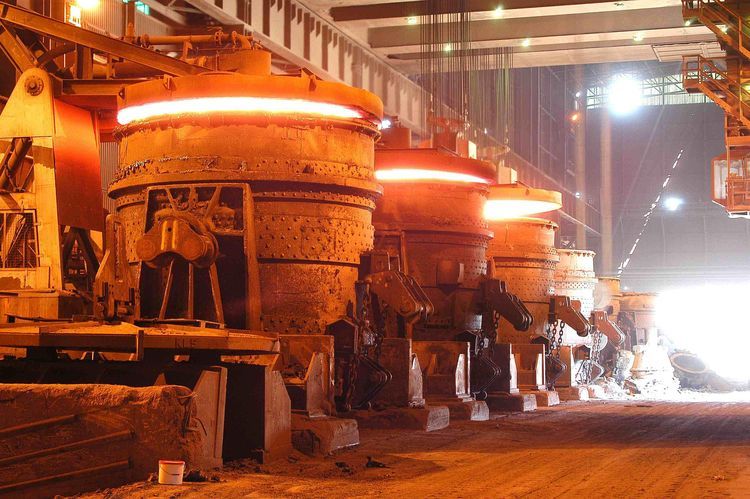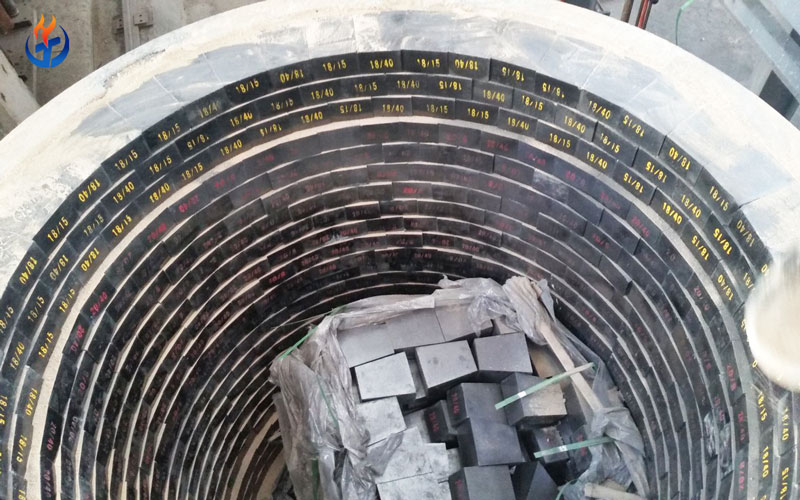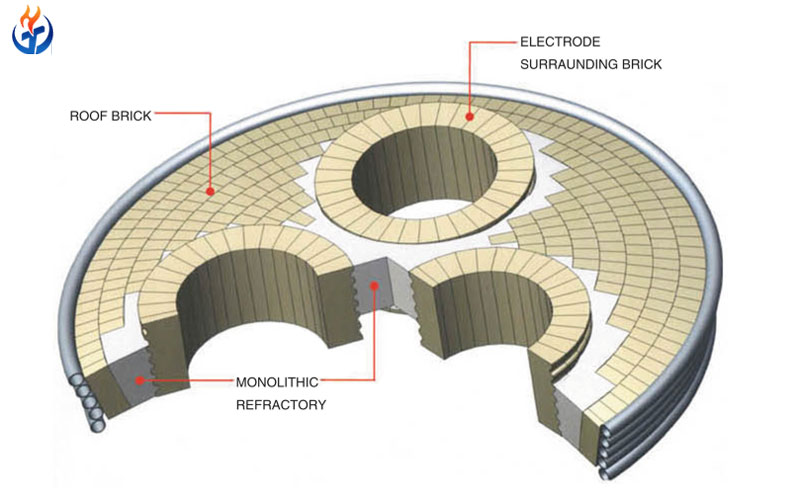
A Lime Kilns Refractory Brick plays a critical role in ensuring stable operation, high thermal efficiency, and long service life of lime production equipment. Lime kilns, including rotary lime kilns and vertical shaft lime kilns, operate under extremely harsh conditions involving high temperatures, alkaline corrosion, mechanical abrasion, and repeated thermal shock. Therefore, different refractory bricks must be selected according to the working environment of each kiln section.
During lime production, limestone is heated at high temperatures to produce quicklime. The inner lining of the kiln directly contacts hot gases, lime materials, and alkaline substances such as CaO. If unsuitable refractory materials are used, problems such as brick erosion, cracking, spalling, and frequent maintenance may occur.
The selection of Lime Kilns Refractory Brick mainly depends on four factors:
- Operating temperature
- Resistance to alkaline corrosion
- Wear resistance
- Thermal shock resistance
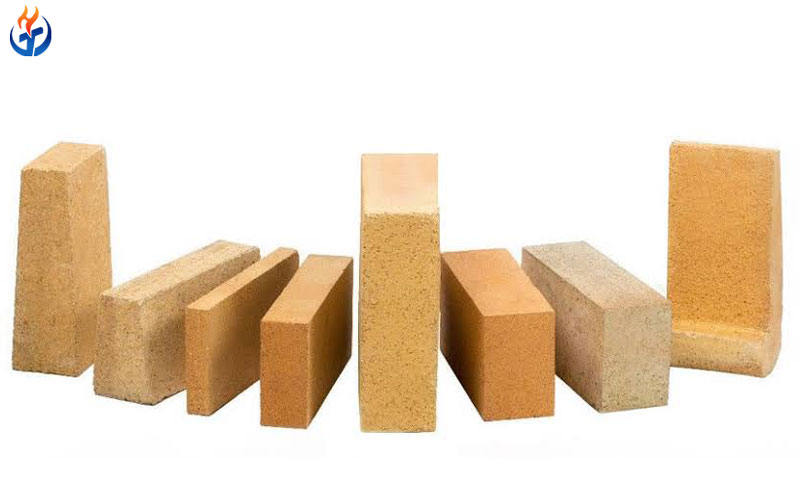
The commonly used refractory bricks for lime kilns include high alumina bricks, magnesia-alumina spinel bricks, silicon carbide-mullite bricks, mullite bricks, clay bricks, phosphate bonded high alumina bricks, and silicon carbide bricks.
Now Xintai Refractory will introduce the major types of refractory bricks used in lime kilns and their applications in different working zones.
Why Lime Kilns Need High-Quality Refractory Bricks
Lime kilns usually operate continuously for long periods. The refractory lining is one of the most important components affecting kiln performance. A suitable Lime Kilns Refractory Brick can provide:
- Excellent resistance to high temperatures
- Strong resistance to alkaline chemical attack
- Good mechanical strength
- Reduced material contamination
- Longer kiln campaign life
- Lower maintenance costs
Different areas inside the kiln have different requirements. For example, the burning zone experiences the highest temperature and strongest chemical erosion, while the feeding area mainly requires impact resistance and wear resistance.
Therefore, choosing one type of refractory brick for the entire kiln is not an ideal solution. The refractory lining should be designed according to the specific operating conditions of each zone.
Refractory Bricks Used in the Burning Zone of Lime Kilns
The burning zone is the most critical area of a lime kiln. The temperature is usually between 1300°C and 1500°C, and the refractory lining faces severe alkaline corrosion caused by calcium oxide (CaO).
The main requirements for refractory bricks in this area include:
- High refractoriness
- Strong alkaline corrosion resistance
- Excellent volume stability
- High creep resistance
- Good thermal shock resistance
2.1 Magnesia-Alumina Spinel Bricks
Magnesia-alumina spinel bricks are one of the most widely used refractory materials in large rotary lime kilns.
Advantages:
- Extremely strong resistance to alkaline corrosion
- Excellent high-temperature stability
- Good resistance to creep deformation
- Long service life under severe conditions
Because lime kiln environments contain high concentrations of CaO and alkaline dust, spinel bricks can maintain good structural stability and prevent rapid erosion.
For large rotary lime kilns requiring long continuous operation, magnesia-alumina spinel bricks are often considered the preferred choice for the burning zone.
2.2 Silicon Carbide-Mullite Bricks
Silicon carbide-mullite bricks, also called SiC-mullite bricks, are another important type of Lime Kilns Refractory Brick.
They combine the excellent properties of silicon carbide and mullite, making them suitable for areas exposed to strong material flow and abrasion.
Main features:
- Excellent wear resistance
- Good alkaline corrosion resistance
- Superior thermal shock resistance
- Good thermal conductivity
- High cost-performance ratio
Silicon carbide-mullite bricks are commonly used in areas where strong mechanical erosion and material impact occur.
2.3 Phosphate Bonded High Alumina Bricks
Phosphate bonded high alumina bricks are widely used in small and medium-sized lime kilns or applications with moderate operating conditions.
Advantages:
- High mechanical strength
- Excellent abrasion resistance
- Good resistance to chemical attack
- Reasonable cost
Compared with premium refractory materials, phosphate bonded high alumina bricks provide a good balance between performance and economic efficiency.
2.4 Magnesia Bricks and Magnesia-Chrome Bricks
Magnesia bricks and directly bonded magnesia-chrome bricks have excellent alkaline corrosion resistance.
They are suitable for lime kilns operating under harsh conditions, such as:
- High alkaline slag environments
- Poor-quality fuel applications
- Strong chemical erosion conditions
However, their thermal shock resistance should be considered carefully depending on kiln operation conditions.
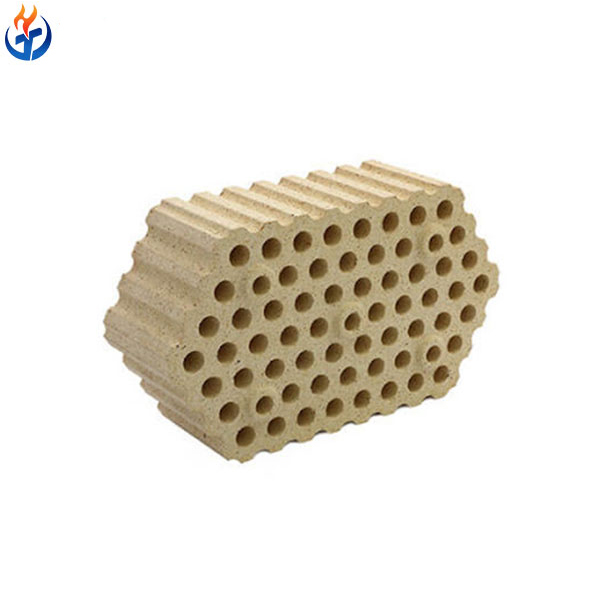
Refractory Bricks Used in the Transition Zone and Calcination Zone
The transition zone usually operates at approximately 1200°C–1350°C. Compared with the burning zone, the temperature is slightly lower, but thermal fluctuations are stronger.
The main challenges include:
- Frequent temperature changes
- Medium-temperature chemical erosion
- Thermal stress
3.1 Mullite Bricks
Mullite bricks are commonly used in transition zones because of their excellent thermal shock resistance.
Features:
- Low thermal expansion
- Excellent volume stability
- Good resistance to thermal cycling
- Stable performance at high temperatures
HM-55 and HM-60 mullite bricks are commonly selected for applications requiring reliable thermal stability.
3.2 High Alumina Bricks
High alumina bricks containing 60%–75% Al₂O₃ are also widely applied in lime kiln transition areas.
Advantages:
- High strength
- Good slag resistance
- Good corrosion resistance
- Cost-effective performance
According to operating conditions, first-grade or second-grade high alumina bricks can be selected.
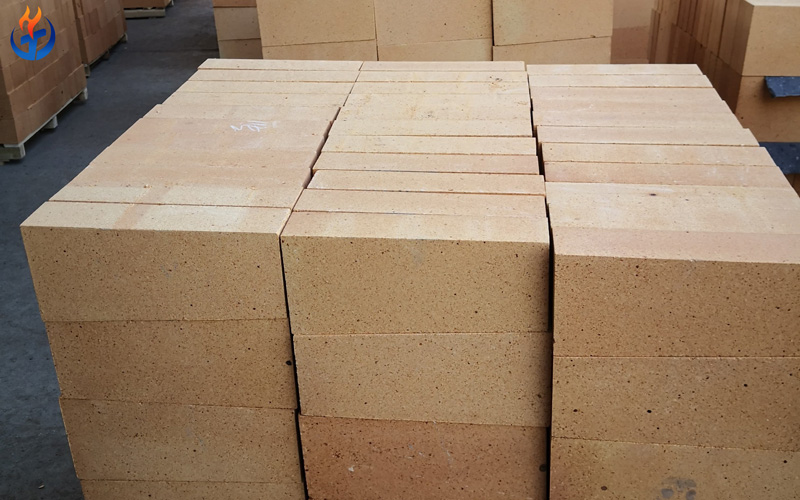
Refractory Bricks Used in the Preheating Zone and Feeding Area
The preheating zone normally operates between 700°C and 1050°C. Although the temperature is lower, this area experiences strong material impact and abrasion.
The main requirements are:
- Good wear resistance
- Strong impact resistance
- Stable performance
- Economic operation cost
4.1 Third Grade High Alumina Bricks
Third-grade high alumina bricks are commonly used in preheating areas.
They provide:
- Good abrasion resistance
- Suitable mechanical strength
- Resistance to material impact
They are economical and suitable for normal operating conditions.
4.2 Dense Clay Bricks
Dense clay bricks are also widely used in lower-temperature areas of lime kilns.
Advantages:
- Good thermal stability
- Low cost
- Easy installation
- Suitable wear resistance
They are mainly used where temperature and chemical corrosion requirements are not extremely high.
Refractory Bricks Used in Cooling Zone and Kiln Outlet
The cooling zone and kiln outlet experience rapid temperature changes, mechanical impact, and severe abrasion.
The main requirements include:
- Excellent thermal shock resistance
- High wear resistance
- Strong mechanical strength
5.1 High Alumina Bricks and Phosphate Bonded High Alumina Bricks
These materials are commonly used because they provide:
- High strength
- Good thermal shock resistance
- Excellent abrasion resistance
They are suitable for areas where hot materials enter the cooling section.
5.2 Silicon Carbide Bricks
Silicon carbide bricks are high-performance refractory materials for severe wear conditions.
Advantages:
- Extremely high wear resistance
- Excellent thermal conductivity
- Long service life
- Good resistance to thermal stress
Because of these properties, silicon carbide bricks are widely used in kiln outlets and cooling zones.
Refractory Bricks Used in Vertical Shaft Lime Kilns
Vertical lime kilns have different operating characteristics compared with rotary kilns. The material moves slowly downward through different temperature zones.
The common Lime Kilns Refractory Brick choices include:
Burning Zone
Recommended materials:
- First-grade high alumina bricks
- High alumina bricks with Al₂O₃ ≥75%
These bricks provide good resistance to high temperatures and alkaline attack.
Preheating and Cooling Zones
Common materials include:
- Second-grade high alumina bricks
- Third-grade high alumina bricks
- Clay bricks
These materials provide sufficient wear resistance and thermal stability for lower temperature areas.
Quick Selection Guide of Lime Kiln Refractory Bricks
| Lime Kiln Area | Operating Condition | Recommended Refractory Brick |
|---|---|---|
| Burning zone | 1300–1500°C, strong CaO corrosion | Magnesia-alumina spinel brick, SiC-mullite brick, phosphate bonded high alumina brick |
| Transition zone | 1200–1350°C, strong thermal shock | Mullite brick, high alumina brick |
| Preheating zone | 700–1050°C, impact and abrasion | High alumina brick, dense clay brick |
| Cooling zone/kiln outlet | Rapid cooling, heavy wear | Silicon carbide brick, phosphate bonded high alumina brick |
| Vertical kiln burning zone | High temperature | High alumina brick |
| Vertical kiln preheating/cooling | Medium temperature | High alumina brick, clay brick |
Conclusion
Selecting the right Lime Kilns Refractory Brick is essential for improving kiln efficiency and extending service life. Different kiln sections require different refractory materials according to temperature, chemical corrosion, mechanical wear, and thermal shock conditions.
For the burning zone of rotary lime kilns, magnesia-alumina spinel bricks, silicon carbide-mullite bricks, and phosphate bonded high alumina bricks are commonly used because of their excellent high-temperature performance. Transition zones usually require mullite bricks and high alumina bricks with good thermal stability. Preheating areas mainly use economical high alumina bricks and clay bricks, while cooling zones often require silicon carbide bricks with superior wear resistance.
By selecting suitable refractory bricks for each application area, lime production companies can achieve more stable kiln operation, longer refractory service life, and reduced production costs. High-quality Lime Kilns Refractory Brick remains a key factor in modern lime kiln construction and maintenance.