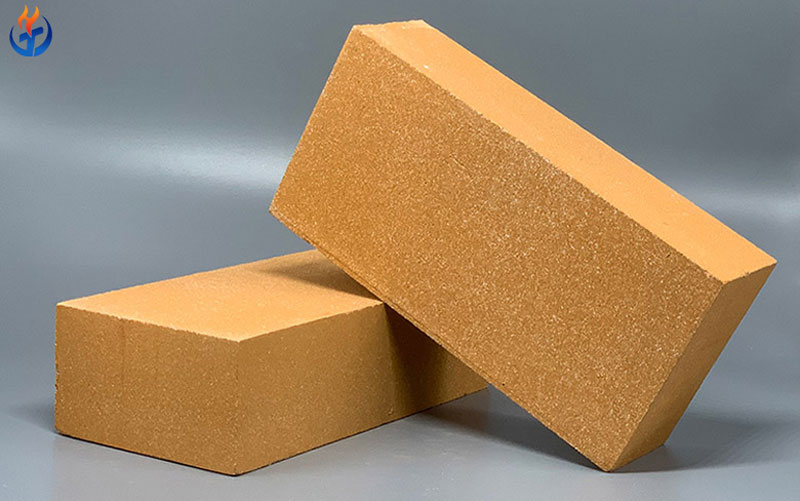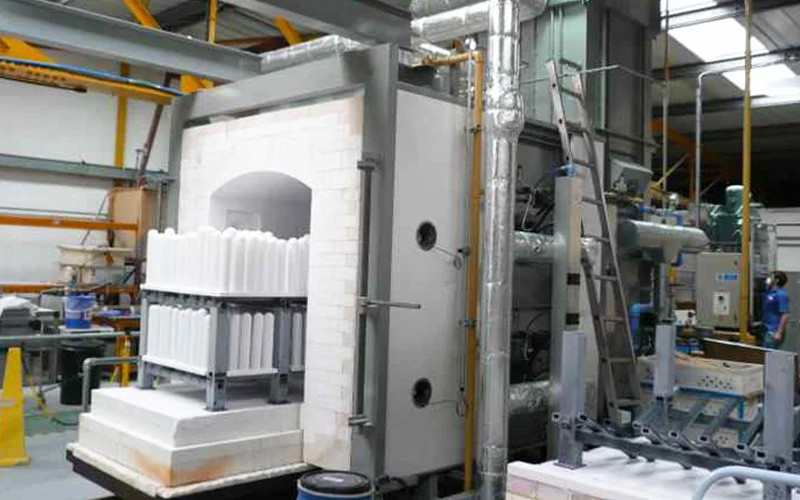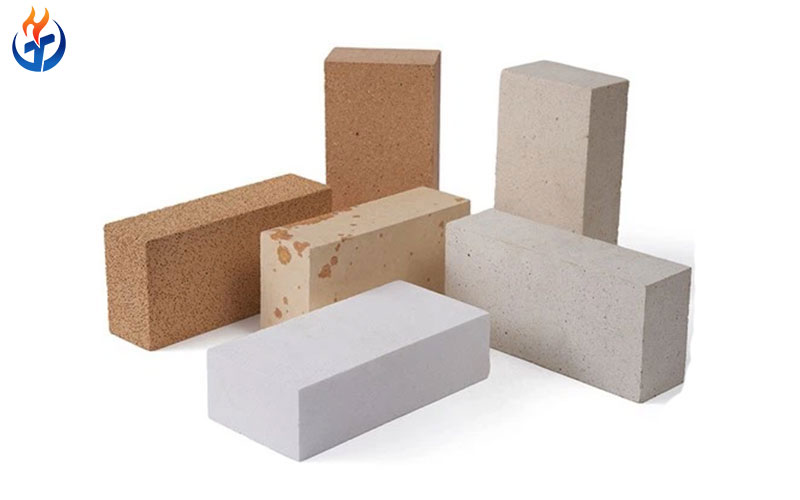
High alumina bricks are widely used refractory materials designed for extreme thermal and chemical environments. Manufactured primarily from bauxite clinker with controlled additives and high-temperature sintering, they provide excellent mechanical strength, corrosion resistance, and thermal stability in industrial furnace applications.
Understanding the classification of high alumina bricks is essential for selecting the right material for different operating conditions. Their types are mainly defined by Al₂O₃ (alumina) content, manufacturing process, and performance characteristics. This article provides a structured and technical breakdown of the main types of high alumina bricks and their industrial applications.
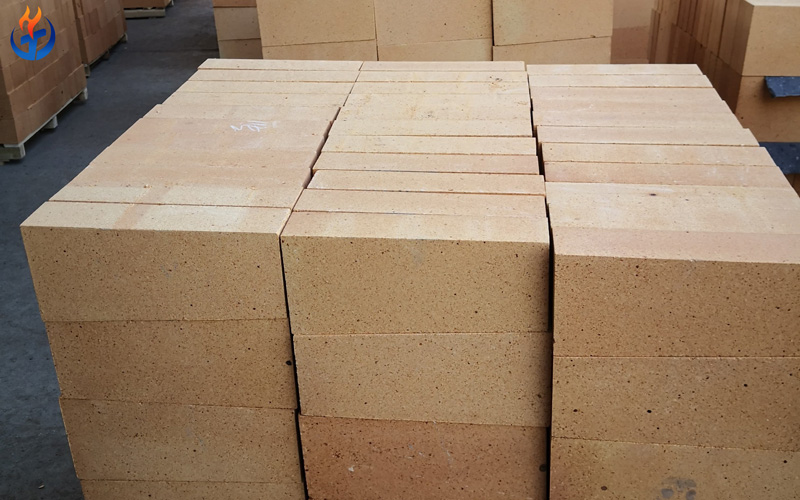
1. Classification of High Alumina Bricks by Al₂O₃ Content
The most fundamental classification method is based on the percentage of aluminum oxide (Al₂O₃), which directly determines refractoriness, density, corrosion resistance, and load-bearing capacity.
1.1 Standard High Alumina Bricks (48%–60% Al₂O₃)
Standard high alumina bricks represent the entry-level category in the high alumina refractory system.
Key Properties
- Moderate refractoriness and thermal stability
- Balanced cost-performance ratio
- Suitable for general industrial furnace lining
- Good compressive strength under medium load conditions
Typical Applications
- Blast furnace linings (non-critical zones)
- Rotary kiln linings in cement production
- General industrial heating furnaces
- Boiler and thermal processing equipment
This type is widely used due to its economic advantage and sufficient durability in moderate temperature environments.
1.2 Medium-Grade High Alumina Bricks (60%–75% Al₂O₃)
This category offers improved performance compared to standard bricks and is commonly used in more demanding environments.
Key Properties
- Higher resistance to slag corrosion
- Improved mechanical strength
- Better thermal shock resistance
- Longer service life under continuous operation
Typical Applications
- Steel ladles and tundish linings
- Cement rotary kilns (high-temperature zones)
- Hot blast stoves
- Industrial furnaces with chemical erosion risks
This is one of the most commonly used grades in heavy industry due to its balanced performance and reliability.
1.3 High Alumina Bricks (75%–90% Al₂O₃)
High alumina bricks in this category are designed for severe thermal and chemical conditions.
Key Properties
- High refractoriness (>1770°C)
- Low porosity and high density
- Strong resistance to chemical corrosion
- Excellent load-bearing performance at elevated temperatures
Typical Applications
- Glass melting furnaces
- Incinerators
- High-temperature reaction chambers
- Petrochemical furnace linings
These bricks are selected when both temperature and chemical attack levels are extremely high.
1.4 Ultra-High Alumina / Corundum Bricks (>90% Al₂O₃)
Corundum bricks represent the highest grade of alumina-based refractories.
Key Properties
- Extremely high purity alumina composition
- Outstanding thermal shock resistance
- Superior wear and corrosion resistance
- Exceptional structural stability at extreme temperatures
Typical Applications
- High-temperature reactors
- Petrochemical cracking furnaces
- Advanced metallurgical equipment
- Specialized industrial kilns requiring extreme durability
This category is used in the most demanding industrial environments where conventional refractories fail.
2. Classification by Manufacturing Process
Another important classification system is based on how the bricks are manufactured and what binders or structural modifications are used.
2.1 Sintered High Alumina Bricks
Sintered bricks are produced through high-temperature firing of shaped raw materials.
Key Properties
- Stable structure and consistent performance
- Good mechanical strength
- Wide applicability across industries
Applications
- General furnace linings
- Industrial boilers
- Rotary kilns and reheating furnaces
This is the most traditional and widely used manufacturing method.
2.2 Low Porosity High Alumina Bricks
These bricks are engineered to reduce internal pore volume.
Key Properties
- High density structure
- Excellent resistance to slag penetration
- Improved thermal conductivity control
- Enhanced lifespan in corrosive environments
Applications
- High-pressure furnace environments
- Steelmaking ladles
- Chemical industry reactors
Low porosity improves resistance against molten metal and slag infiltration.
2.3 Phosphate-Bonded High Alumina Bricks
These bricks use phosphate or phosphate compounds as binders instead of traditional sintering.
Key Properties
- High abrasion resistance
- Strong bonding strength at medium temperatures
- Excellent resistance to chemical attack
- Improved performance under mechanical wear
Applications
- Rotary kilns
- Cement industry transition zones
- High-wear furnace areas
Phosphate bonding significantly improves resistance to erosion and abrasion.
2.4 Low Creep High Alumina Bricks
Low creep bricks are engineered to resist deformation under long-term high-temperature load.
Key Properties
- Excellent structural stability under stress
- Reduced deformation at high temperatures
- High load-bearing capacity
- Long operational lifespan
Applications
- Blast furnace hearths
- Hot blast stoves
- Furnace roofs and load-bearing structures
These bricks are critical in continuous-operation furnaces where deformation must be minimized.
2.5 Mullite High Alumina Bricks
Mullite-based bricks contain mullite as the primary crystalline phase.
Key Properties
- Excellent thermal shock resistance
- Stable crystal structure at high temperatures
- Good resistance to rapid temperature changes
- Moderate chemical resistance
Applications
- Glass industry furnaces
- Ceramic kilns
- Thermal cycling environments
Mullite bricks are particularly effective where temperature fluctuation is frequent.
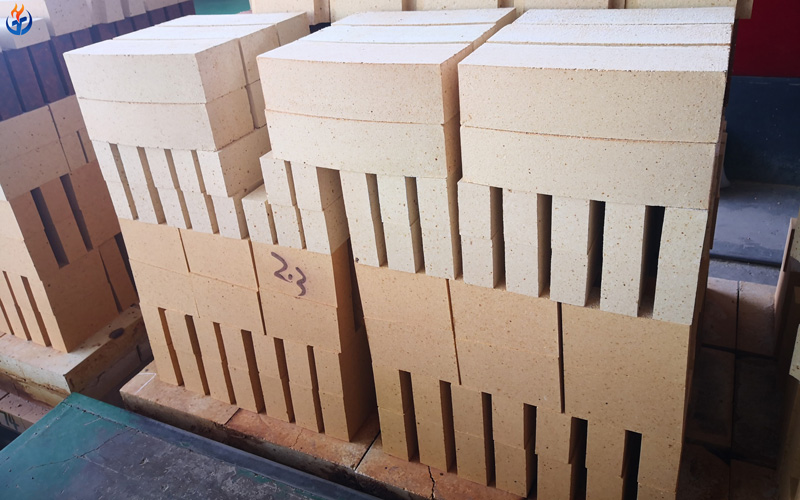
3. Classification by Functional Performance
High alumina bricks can also be categorized based on specialized performance characteristics tailored to industrial conditions.
3.1 Anti-Spalling High Alumina Bricks
Designed to resist cracking and surface peeling caused by thermal stress.
Key Properties
- Enhanced thermal shock resistance
- Improved structural elasticity
- Resistance to rapid heating and cooling cycles
Applications
- Kilns with frequent start-stop cycles
- Thermal processing furnaces
- Cement rotary kilns
3.2 Alkali-Resistant High Alumina Bricks
These bricks are designed to resist alkali corrosion in chemical environments.
Key Properties
- Resistance to sodium and potassium vapor attack
- Stable performance in alkaline atmospheres
- Reduced chemical degradation
Applications
- Cement kilns
- Waste incineration plants
- Chemical reactors
3.3 Acid-Resistant High Alumina Bricks
Specially formulated to resist acidic slag and corrosive gases.
Key Properties
- Strong resistance to acidic environments
- Stable chemical composition
- Reduced surface degradation
Applications
- Chemical processing furnaces
- Acid production equipment
- Metallurgical refining systems
3.4 Insulating High Alumina Bricks
These bricks prioritize thermal insulation over structural strength.
Key Properties
- Low thermal conductivity
- Lightweight structure
- Energy-saving performance
- Moderate strength for lining use
Applications
- Furnace insulation layers
- Back-up linings in industrial kilns
- Energy-efficient thermal systems
3.5 Oxide-Enhanced / Composite High Alumina Bricks
This advanced category includes modifications such as zirconia or other oxide reinforcement.
Key Properties
- Enhanced thermal shock resistance
- Improved mechanical strength
- Better resistance to cracking under stress
- Increased lifespan in harsh environments
Applications
- High-performance metallurgical furnaces
- Advanced ceramic kilns
- Aerospace and special alloy production equipment
4. Classification by Shape and Structural Design
Beyond material composition, high alumina bricks are also categorized based on geometry.
4.1 Standard Rectangular Bricks
- Most commonly used shape
- Easy installation and replacement
- Suitable for general furnace linings
4.2 Wedge Bricks
- Designed for curved furnace structures
- Used in circular kilns and arches
- Ensures tight structural fitting
4.3 Arch Bricks
- Used in dome-shaped furnace roofs
- High structural stability under load
- Common in large industrial kilns
4.4 Checker Bricks
- Perforated design for regenerative chambers
- Used in hot blast stoves
- Enhances heat exchange efficiency
4.5 Custom-Shaped Bricks
- Fully customized geometry
- Designed for special furnace configurations
- Used in non-standard industrial equipment
Conclusion
High alumina bricks are not a single uniform material but a broad family of refractory products engineered for different industrial needs. Their classification can be summarized into four main systems:
- By Al₂O₃ content: from standard to ultra-high purity corundum bricks
- By manufacturing process: sintered, phosphate-bonded, low porosity, mullite, and low creep types
- By functional performance: anti-spalling, alkali-resistant, acid-resistant, insulating, and composite types
- By shape: standard, wedge, arch, checker, and customized designs
Selecting the correct type of high alumina brick is critical for optimizing furnace efficiency, reducing maintenance costs, and extending service life in high-temperature industrial systems. Welcome to contact Xintai Refractory for more about high alumina bricks.