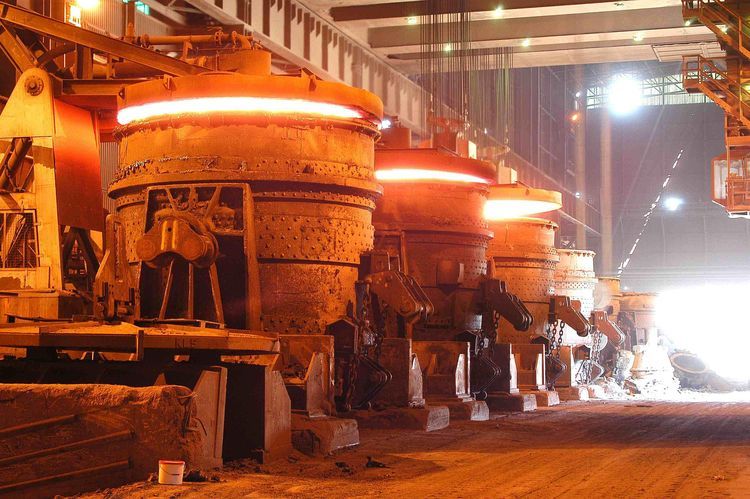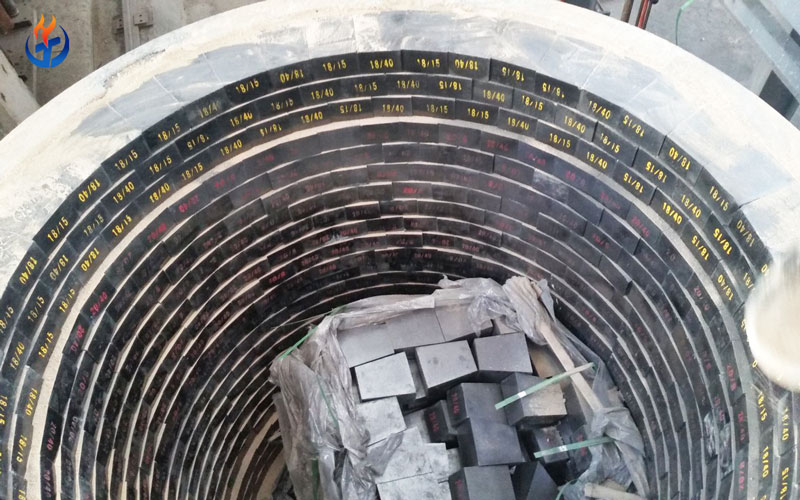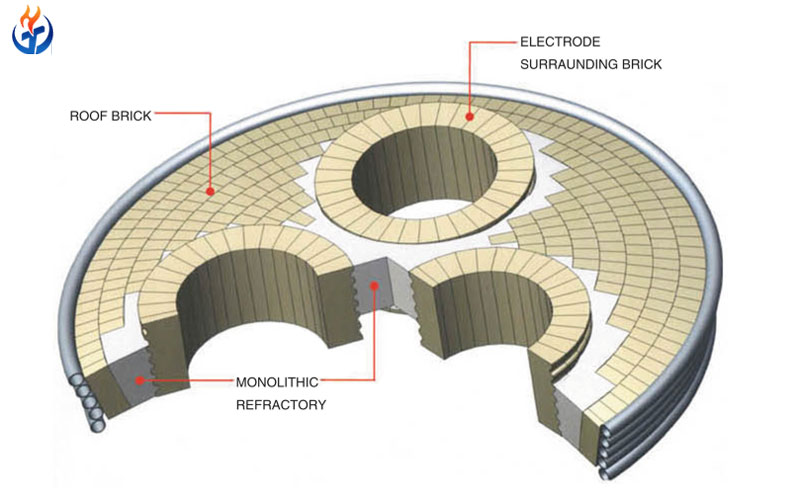
The service performance of a basic oxygen furnace depends heavily on the quality and rational configuration of its refractory lining. In steelmaking operations, the lining is continuously exposed to extreme thermal loads, aggressive chemical attack from molten slag and steel, and severe mechanical impact caused by oxygen blowing and charge movement.
Converter refractory materials are therefore not simply consumables but critical functional materials that directly determine production stability, energy efficiency, and furnace campaign life. A scientifically designed lining system can significantly reduce downtime, improve steel quality consistency, and lower overall refractory consumption.
Modern converter linings are no longer built using a single material type. Instead, they adopt a zone-based configuration strategy, where different refractory grades are applied according to thermal profile, corrosion intensity, and mechanical stress distribution.
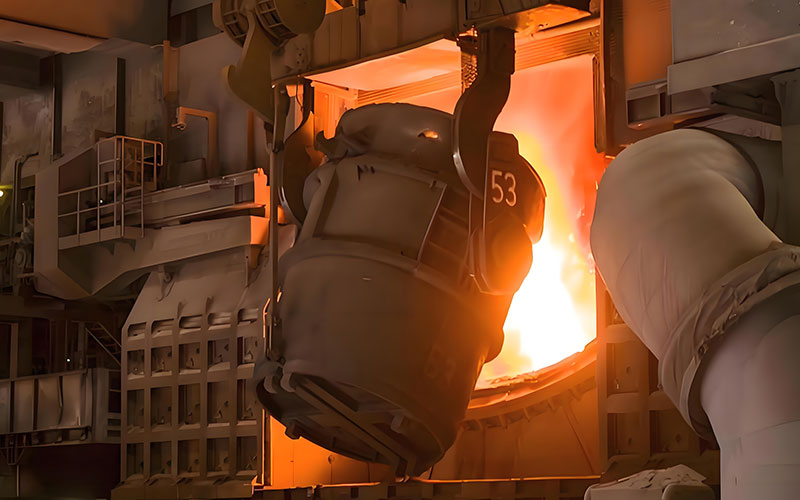
Functional Requirements of Converter Refractory Materials
To ensure stable furnace operation, converter refractory materials must meet multiple performance requirements simultaneously. These requirements are interdependent and often need to be balanced during material selection.
1. High-Temperature Corrosion Resistance and Chemical Stability
During steelmaking, the lining is exposed to:
- Liquid steel at approximately 1600°C or higher
- Aggressive basic slag rich in CaO, FeO, and MgO
- Oxygen jet reactions and oxidizing atmosphere
Therefore, refractory materials must:
- Resist dissolution in slag
- Maintain phase stability under high temperature
- Prevent chemical reaction with molten metal
- Minimize penetration of slag components into the brick structure
A stable microstructure is essential to extend service life and reduce lining wear rate.
2. Excellent Thermal Shock Resistance
Converters operate in highly dynamic thermal cycles:
- Rapid heating during oxygen blowing
- Sudden cooling during tapping and charging
- Localized temperature gradients across lining zones
This creates severe thermal stress. High-quality converter refractory materials must:
- Withstand rapid expansion and contraction
- Maintain structural integrity under repeated thermal cycling
- Prevent crack formation and spalling
- Retain strength after thermal fatigue
Materials with optimized grain distribution and controlled porosity perform better under such conditions.
3. High Mechanical Strength and Abrasion Resistance
In addition to thermal stress, converter linings are subjected to mechanical damage caused by:
- Scrap charging impact
- Molten steel turbulence
- Slag movement and erosion
- Oxygen lance jet scouring
Thus, refractory materials must exhibit:
- High cold crushing strength
- Strong flexural resistance at high temperature
- Excellent wear and erosion resistance
- Dense microstructure with low porosity
Mechanical durability is especially important in high-wear zones such as the trunnion area and slag line.
4. Low Thermal Conductivity for Energy Efficiency
Thermal insulation is another critical requirement. Lower thermal conductivity offers:
- Reduced heat loss through furnace shell
- Improved thermal efficiency of steelmaking process
- Protection of steel shell from overheating deformation
- Lower fuel and oxygen consumption in auxiliary processes
In modern designs, a multi-layer insulation system is used, combining dense working lining with backup insulating layers.
5. Compatible Thermal Expansion Behavior
Mismatch in thermal expansion between refractory layers and steel shell can lead to structural failure. Therefore, converter refractory systems must ensure:
- Controlled and predictable expansion coefficients
- Good compatibility between different refractory zones
- Reduced thermal stress accumulation at joints
- Stable performance under cyclic heating conditions
This is particularly important in transitions between high-wear and low-wear zones.
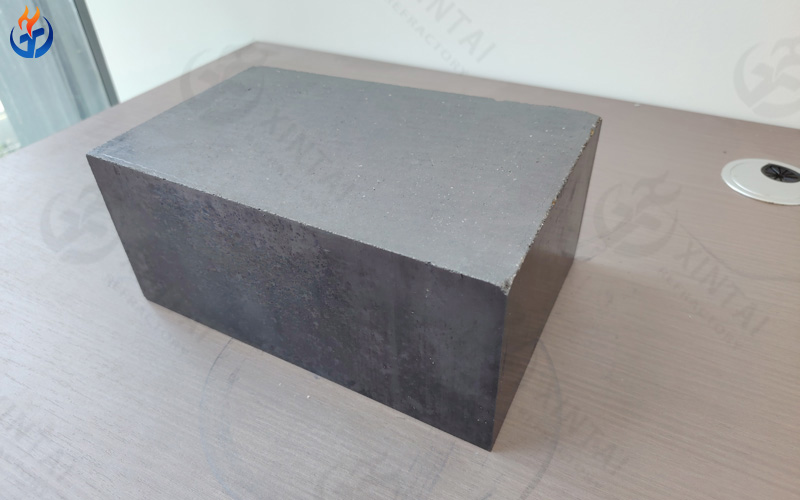
Zoned Design of Converter Lining System
A converter is not a uniform thermal environment. Different areas experience different operational conditions, requiring tailored selection of refractory materials.
1. Furnace Bottom
The furnace bottom experiences:
- High static load from molten steel
- Intense chemical erosion from slag
- Long exposure time with limited mechanical disturbance
Recommended materials:
- High-density magnesia bricks
- Magnesia-carbon bricks for enhanced slag resistance
- Direct-bonded magnesia products
Key properties required:
- High bulk density
- Excellent slag penetration resistance
- Strong structural stability under long exposure
2. Furnace Wall
The furnace wall is exposed to:
- Strong oxygen jet impact
- Slag splashing and circulation
- Frequent thermal cycling
Commonly used materials:
- Magnesia-carbon bricks
- High alumina bricks in less aggressive zones
- Composite refractory systems
Performance focus:
- Thermal shock resistance
- Erosion resistance
- High-temperature mechanical strength
Magnesia-carbon bricks are widely used due to their excellent combination of thermal stability and slag resistance.
3. Furnace Roof (Converter Top)
The upper section experiences:
- High radiant heat
- Relatively lower direct slag contact
- Frequent thermal cycling
Preferred materials:
- High alumina bricks
- Alumina-based castables
- Lightweight insulating refractories in backup layers
Key requirements:
- Thermal insulation performance
- Resistance to thermal cycling
- Structural stability under radiant heat
4. Slag Line Zone (Critical Wear Area)
The slag line is one of the most aggressive zones. It is exposed to:
- Continuous slag erosion
- Chemical attack from FeO-rich slag
- Severe thermal shock and mechanical wear
Recommended converter refractory materials:
- High-performance magnesia-carbon bricks
- Ultra-low carbon Mg-C composites
- Antioxidant-enhanced refractories
This zone typically determines the overall campaign life of the converter lining.
Material Comparison: High Alumina Bricks vs Magnesia-Carbon Bricks
Two of the most widely used refractory types in converter linings are high alumina bricks and magnesia-carbon bricks.
High Alumina Bricks
Characteristics:
- High Al₂O₃ content (typically above 48%)
- Stable structure under oxidizing conditions
- Good medium-to-high temperature strength
Advantages:
- Cost-effective
- Reliable thermal stability
- Suitable for roof and low-corrosion areas
Limitations:
- Weak resistance to basic slag
- Not suitable for severe erosion zones
Magnesia-Carbon Bricks
Characteristics:
- MgO combined with graphite carbon
- Non-wetting behavior against slag
- Strong thermal shock resistance
Advantages:
- Excellent slag line performance
- High erosion resistance
- Long service life in severe conditions
Limitations:
- Carbon oxidation at high temperature
- Requires antioxidants and controlled atmosphere
Design Principles for Selecting Converter Refractory Materials
Material selection should follow engineering principles rather than isolated property evaluation.
1. Thermal Load Matching
Each zone should be matched according to:
- Peak temperature exposure
- Heating and cooling rate
- Thermal gradient distribution
2. Corrosion Environment Adaptation
Consider:
- Slag basicity
- Iron oxide content
- Oxygen potential
3. Life-Cycle Cost Optimization
Evaluation should include:
- Total service life
- Maintenance frequency
- Downtime costs
4. Structural Compatibility
Ensure:
- Strong bonding between lining layers
- Controlled thermal expansion mismatch
- Prevention of interface cracking
Operational Factors Affecting Performance
Even high-quality converter refractory materials can fail prematurely if operating conditions are not optimized.
Key factors include:
- Oxygen lance position and jet intensity
- Scrap size and charging practice
- Slag composition stability
- Tapping temperature control
- Furnace turnaround time
Operational control is as important as material selection.
Conclusion
A converter lining must be designed as an integrated system rather than a collection of individual materials. Proper selection of converter refractory materials according to zone-specific thermal, chemical, and mechanical conditions enables:
- Longer campaign life
- Reduced refractory consumption
- Improved thermal efficiency
- Stable steel production quality
- Lower operational cost
High alumina bricks and magnesia-carbon bricks each play specialized roles in different furnace zones. When combined in a scientifically optimized structure, they form a high-performance lining system capable of withstanding extreme steelmaking environments.
Ultimately, successful converter refractory design is the result of balancing material science, operational control, and lifecycle economics to achieve maximum furnace efficiency and durability.