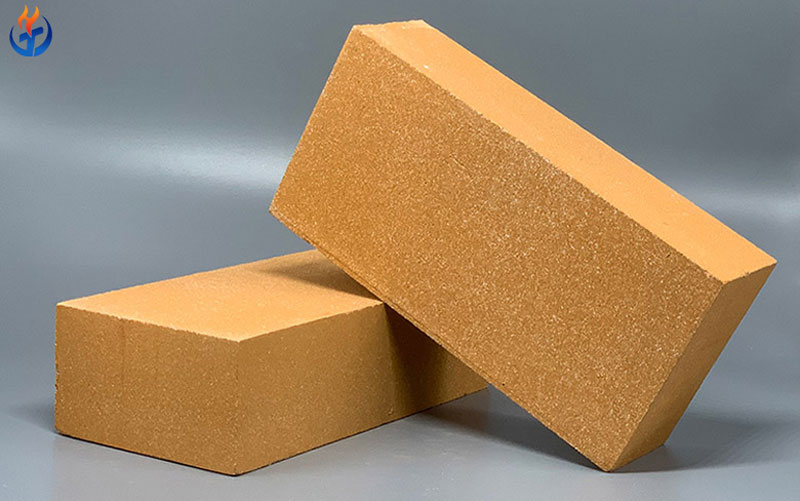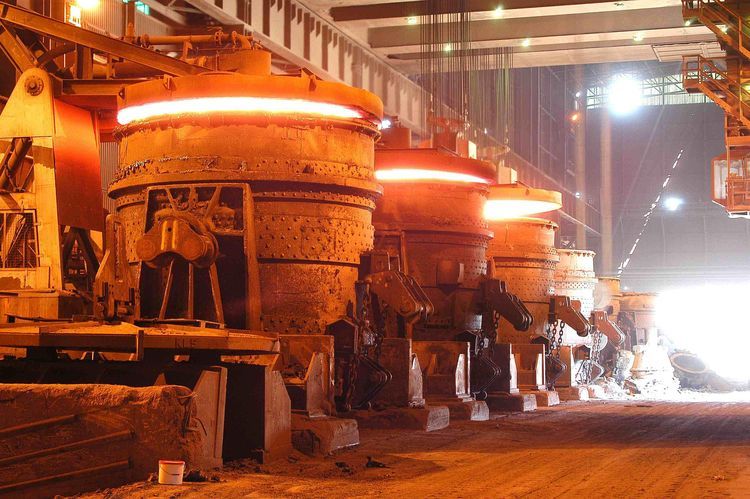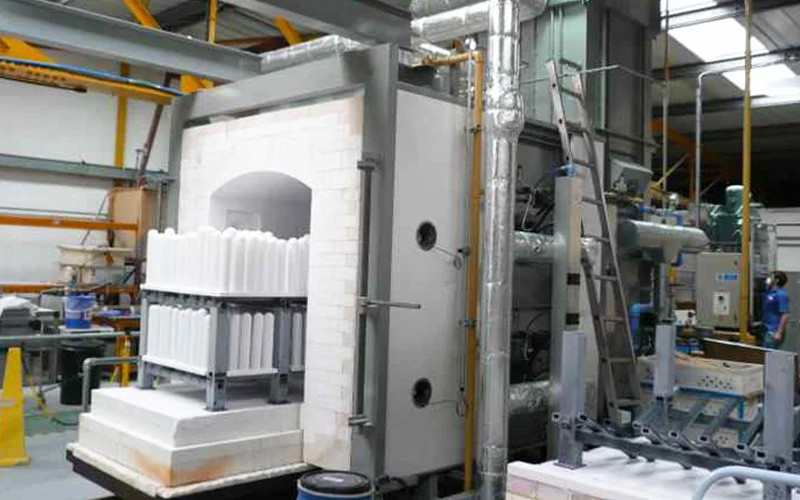
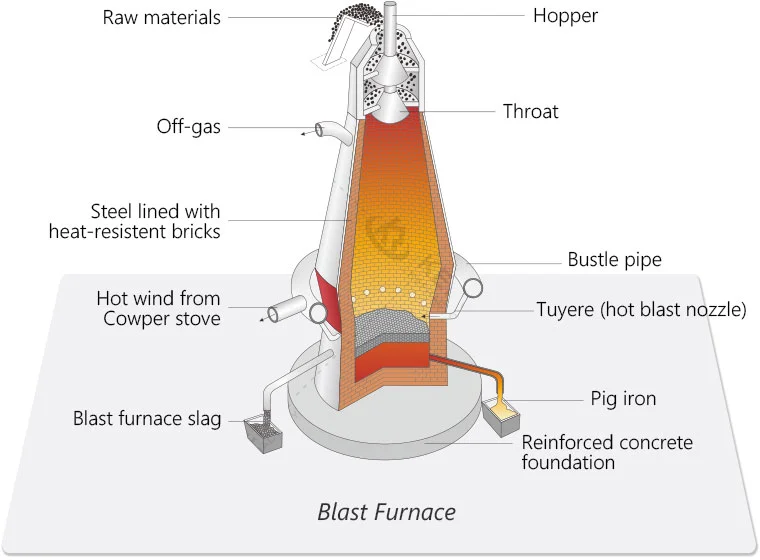
The efficiency and durability of a blast furnace heavily depend on the performance of refractory materials for blast furnace lining. These materials are designed to withstand extreme temperatures, chemical attack, and mechanical wear that occur in ironmaking operations. Selecting the right refractory is crucial for maximizing furnace life, improving operational efficiency, and reducing maintenance downtime. Now, Xintai Refractory will discuss the types of refractory materials available, their properties, and best practices for selecting the most suitable lining for different sections of a blast furnace.
Understanding Refractory Materials for Blast Furnace
Refractory materials for blast furnace are specialized products that protect the furnace structure from high temperatures, molten iron, slag, and chemical corrosion. Traditionally, high-alumina bricks have been widely used because of their thermal stability, chemical inertness toward iron and carbon monoxide, and resistance to abrasion. These bricks perform reliably in the middle and upper furnace regions, where mechanical wear is moderate and chemical attack is limited.
However, challenges arise when high-alumina bricks are exposed to alkaline vapors. At elevated temperatures in a basic environment, corundum (α-Al₂O₃) can convert into β-Al₂O₃, which expands by approximately 20%. This volume change can cause cracks and reduce the service life of the bricks. To enhance resistance, alumina bricks are often combined with mullite or chrome-alumina matrices, improving chemical stability under alkaline conditions.
Silicon Carbide: Advanced Refractory Solution
Silicon carbide (SiC) is increasingly preferred for lower furnace and belly sections due to its superior chemical and mechanical properties. Refractory materials for blast furnace made of SiC are highly resistant to chemical attack, abrasion, and oxidation. They maintain structural integrity under high thermal stress and exhibit excellent thermal shock resistance.
The main challenge for SiC bricks lies in binder selection. Various methods have been studied, including tar-bonded SiC-graphite composites, ceramic (clay) bonded SiC, nitrogen or oxynitride bonded SiC, and self-bonded SiC bricks. Self-bonded SiC offers the highest alkali resistance, although it is more difficult and expensive to manufacture. To balance performance and cost, many producers develop SiC composites with high alumina or graphite, which combine excellent stability with practical manufacturability.
Magnesia Refractory Materials
Magnesia-based refractory materials are used in the lower, belly, and waist sections of blast furnaces. They typically provide longer life than standard clay bricks but fall short of the durability offered by SiC-based systems. Choosing magnesia refractories requires evaluating mechanical strength, chemical resistance, and cost considerations for specific furnace applications.
Lower furnace and belly linings typically operate for 5–8 years, with exceptional cases reaching 10–12 years. Level II maintenance involves halting operations, removing worn lining, cooling, inspecting, replacing bricks, and servicing furnace equipment. For minor repairs, gunning techniques are applied using mortars based on high-alumina cement or low-iron alumina cement, sprayed under controlled pressures below 1.5 MPa.

Carbon-Based Refractory Materials
The hearth and tuyere regions of a blast furnace are predominantly lined with carbon-based materials. Carbon demonstrates exceptional performance under reducing or inert atmospheres, with refractoriness exceeding 3,000°C. Its mechanical strength increases with temperature, thermal expansion is minimal, and thermal shock resistance is excellent. Additionally, carbon bricks are non-wettable by molten iron and slag, making them ideal for large, dimensionally accurate hearth bricks.
Hearth bricks can reach lengths of 1.5–3.5 meters and cross-sectional dimensions of 0.5–0.65 meters. Above the hearth, high-alumina grooved bricks are often used to prevent brick floating, combined with top-setting methods to enhance stability. Iron interactions at 1100–1150°C are minimal, forming hard, inert protective layers that reduce wear. Hearth temperature monitoring serves as an indicator of lining health, as brick thinning near 1100–1150°C isotherms can raise brick surface temperatures and reduce tapping temperatures. Cooling systems under large furnaces are essential to prevent uneven heating and sudden failures.
Chemical Stability and Alkali Resistance
Alkali attack is a critical factor in selecting refractory materials for blast furnace lining. Alkali metals in furnace charge can reach 10–15% at the edges and 1–2% in the center. These vapors form compounds that penetrate the refractory, condense, melt, and react with furnace gases. Silica-containing refractories react with alkalis to form compounds such as potassium and sodium aluminosilicates. These compounds can expand up to 45%, causing stress and fractures.
This demonstrates that silica-based refractory materials are unsuitable for lower furnace sections. While high-alumina bricks resist alkalis to some extent, they remain vulnerable due to phase transformations and high thermal expansion. Carbon and SiC-based refractories, particularly self-bonded or Sialon-bonded SiC, exhibit superior performance in such environments, combining alkali resistance, thermal stability, and mechanical durability.
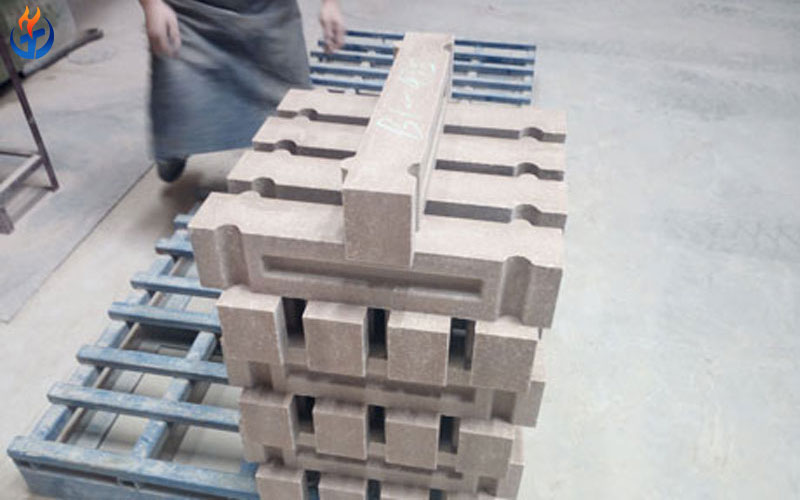
Sialon and Nitride-Bonded SiC
Sialon-bonded SiC refractory materials are an advanced solution. Compared to nitrogen-bonded SiC, Sialon composites show larger crystallites, lower porosity, and better oxidation resistance, making them suitable for mid-furnace and high-stress applications. Nitride-bonded SiC also provides high strength at elevated temperatures, low thermal expansion, and high thermal conductivity, enhancing thermal shock resistance. Protective oxide films on crystal surfaces further reduce wear, making them ideal for demanding furnace conditions.
Optimizing Porosity and Mechanical Properties
The chemical composition and porosity of refractory materials for blast furnace lining are critical for performance. Low-porosity materials (<12%) resist slag infiltration significantly better than higher-porosity alternatives (~17%). At room temperature, wear can be 5–6 times lower, while at 980°C, low-porosity materials are 10–20 times more wear-resistant. Proper cooling remains essential to maintain lining stability over long operational periods.
Modern blast furnaces achieve hearth and tuyere lining lifespans of 15–20 years, with regular replacement of high-wear zones. Tap hole mortars must be chemically stable, harden quickly, and minimize environmental emissions. Phenolic resin-bonded tar mortars are increasingly used, reducing smoke, improving safety, and shortening repair downtime, which enhances furnace productivity.
Summary and Recommendations
Selecting the right refractory materials for blast furnace requires balancing chemical stability, thermal performance, mechanical strength, and cost. Key considerations include:
- High Alumina Bricks: Suitable for moderate conditions but vulnerable to alkali attack in lower furnace sections.
- Silicon Carbide Bricks: Provide superior alkali resistance, thermal shock stability, and wear resistance. Self-bonded and Sialon-bonded SiC are particularly effective.
- Magnesia Bricks: Offer moderate improvements over clay bricks but are less effective than SiC composites.
- Carbon-Based Bricks: Essential in hearth and tuyere regions for high-temperature performance, thermal shock resistance, and resistance to molten iron and slag.
Correct furnace design, cooling systems, and maintenance strategies further extend refractory life. Composites combining SiC with high alumina, graphite, or Sialon provide durability, chemical resistance, and thermal efficiency for modern blast furnace operations.
In conclusion, refractory materials for blast furnace lining are a critical factor in optimizing ironmaking efficiency and furnace longevity. By understanding material properties, chemical interactions, and operational demands, steelmakers can select the best refractory solutions, reduce maintenance costs, and ensure safe, continuous furnace operation. Advances in material science continue to provide innovative solutions, meeting the increasing performance demands of modern ironmaking.