Low cement castables (LCCs) are a class of high-performance refractory materials characterized by a significantly reduced cement content compared to traditional refractory castables. The cement content in LCCs typically ranges from 1% to 8%, whereas in conventional castables, cement content may range between 15% and 20%. This reduction in cement content results in a decrease in the calcium oxide (CaO) content, which is generally limited to 1.0%-2.5%. LCCs are formulated with fine particles of less than 1μm in size, along with additives such as calcium aluminate cement, silica fume, and aluminum oxide micro-powders, to optimize the rheological properties and particle packing.
This advanced formulation results in LCCs with several benefits, such as low porosity, high density, and improved thermal shock resistance. The low cement content significantly improves the refractory properties by minimizing the formation of low-melting phases that typically degrade high-temperature performance. These improvements make LCCs more durable and more effective than conventional refractories in high-temperature, high-stress industrial applications.
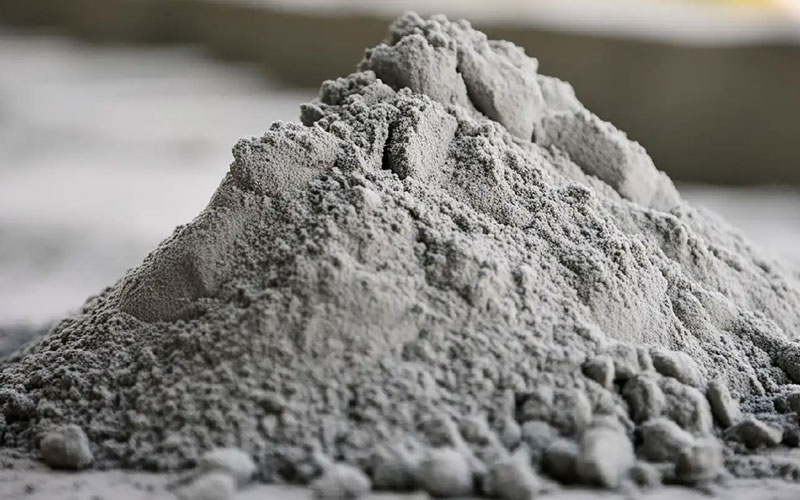
Manufacturing Process of Low Cement Castables
The manufacturing process of low cement castables is more sophisticated compared to conventional castables. During the production of LCCs, several key factors are optimized to ensure that the castable performs effectively in high-temperature environments. The formulation includes a combination of fine powder materials such as micro-silica, aluminum oxide micro-powder, and special additives like dispersing agents that help improve the material’s flowability and consistency.
The manufacturing process follows these key steps:
Material Selection: Fine raw materials with high purity, such as alumina, silica fume, and calcium aluminate cement, are carefully selected. These materials are finely ground to ensure high surface area, which enhances the bond strength between particles and improves the overall mechanical properties of the castable.
Mixing: The selected materials are mixed thoroughly using advanced equipment, ensuring uniform distribution of additives and raw materials. This step is critical because the efficiency of the mixing process directly affects the final product’s performance.
Water Addition: A precise amount of water is added to the mixture, generally less than 7% by weight, which is much lower than in conventional castables. This low water-to-material ratio ensures the castable remains dense, reducing its porosity and improving thermal shock resistance.
Molding and Casting: The castable mixture is then placed into molds. For large applications like furnace linings or kiln construction, casting is often done using specialized forms to shape the material correctly.
Curing: After casting, the castable is left to cure at ambient temperature or under controlled conditions for a specified period. This ensures the material solidifies properly and achieves the desired mechanical strength.
Drying and Firing: In some cases, the castable may undergo a firing process to further enhance its thermal properties. This is especially true for higher-performance grades of LCCs.
Key Properties of Low Cement Castables
The primary reason for using low cement castables is their superior performance in extreme conditions. Several key properties make LCCs ideal for high-temperature applications:
High Density and Low Porosity: The optimized particle packing theory used in LCCs ensures that the material has a low porosity and high density. The low porosity results in reduced gas permeability, which enhances the material’s ability to withstand thermal stress and mechanical wear.
Thermal Shock Resistance: LCCs are designed to handle rapid temperature changes without cracking or losing their structural integrity. This property is crucial for industries where sudden temperature fluctuations are common, such as in kilns and furnaces.
Enhanced Strength at High Temperatures: One of the most significant advantages of LCCs is their ability to maintain or even increase their strength at elevated temperatures. While conventional castables tend to lose strength as the temperature rises, LCCs are designed to maintain their structural integrity even in extreme conditions.
Reduced Cement Content and Better High-Temperature Performance: The reduced cement content in LCCs leads to fewer low-melting phases at high temperatures. This results in improved resistance to slag and molten metal, which are common in metalworking industries.
Improved Wear and Abrasion Resistance: LCCs have excellent wear and abrasion resistance, making them ideal for applications that involve constant mechanical wear, such as in steel production and cement kilns.
Types of Low Cement Castables
| Type | Key Characteristics | Typical Applications |
|---|---|---|
| High Alumina LCCs | – High strength – Excellent thermal shock resistance – Outstanding performance at high temperatures | – Cement kilns – Steel furnaces – Glass production |
| Mullite LCCs | – Superior high-temperature stability – Excellent resistance to chemical attacks | – Non-ferrous metal production – Glass manufacturing |
| Corundum LCCs | – High wear and abrasion resistance – Extremely durable in high-wear environments | – Blast furnaces – Steel ladles – High-wear industrial components |
| Magnesia-Alumina LCCs | – Good balance between thermal resistance and slag resistance – Suitable for basic slag conditions | – Steel furnaces – Blast furnaces – Other high-temperature applications with slag exposure |
Applications of Low Cement Castables
Low cement castables are used in various high-temperature applications, particularly in industries where refractories are exposed to severe thermal, chemical, and mechanical stresses. The following are some of the most common applications of LCCs:
Cement Industry: In cement kilns, LCCs are used for the construction of kiln linings, particularly in high-temperature areas such as the front end, kiln door, and coal injection pipes. Their ability to withstand rapid temperature changes and thermal shock makes them ideal for cement production.
Steel Industry: The steel industry utilizes LCCs in blast furnaces, steel ladles, and electric arc furnaces. Their superior resistance to thermal shock and slag corrosion makes them well-suited for steel production, where high temperatures and molten metal can cause significant wear on traditional refractory materials.
Glass Manufacturing: Glass melting furnaces operate at extremely high temperatures, often exceeding 1,500°C. LCCs are used in the lining of these furnaces to provide a durable and stable material that can withstand the harsh conditions of molten glass.
Non-ferrous Metal Production: LCCs are used in the production of non-ferrous metals like aluminum, copper, and zinc. They are used for furnace linings, ladles, and other high-temperature components that require resistance to both thermal and chemical attacks.
Petrochemical Industry: In the petrochemical industry, LCCs are used in reactors, catalytic converters, and other high-temperature equipment exposed to aggressive chemicals and thermal stresses. Their resistance to chemical corrosion and high thermal stability makes them ideal for these applications.
Conclusion
Low cement castables are a revolutionary advancement in refractory technology, offering superior performance in extreme conditions compared to traditional castables. With their high density, low porosity, excellent thermal shock resistance, and superior strength at high temperatures, LCCs have become the material of choice in industries such as cement production, steel manufacturing, glass production, and petrochemicals. The benefits of LCCs, including extended lifespan, improved thermal efficiency, and reduced maintenance costs, make them a valuable investment for industries that rely on high-temperature processes. As technology continues to advance, the applications of low cement castables are likely to expand, further improving industrial efficiency and sustainability.
Looking for low cement refractory castables and other refractory materials? Welcome to Get more from Xintai refractory!