Aluminum magnesium castables are widely used in steel ladles, tundishes, and other high-temperature metallurgical equipment because of their excellent slag resistance and high-temperature performance. In refractory formulation, the binder plays a critical role in determining workability, ambient strength, drying behavior, and performance during high-temperature service. Different binder systems offer distinct advantages, so selecting the appropriate type requires careful consideration of operating conditions, installation methods, and performance requirements.
1. Cement Binders: Calcium Aluminate Cement
Calcium aluminate cement (CAC) is one of the most commonly used binders in aluminum magnesium castables. It provides early strength through hydration reactions, allowing castable linings to develop sufficient strength for demolding, handling, and subsequent drying.
The main advantages of cement binders include rapid early strength development, good installation adaptability, and well-established application technology. These characteristics make CAC suitable for refractory castables that require reliable construction performance and predictable curing behavior.
However, cement introduces calcium oxide (CaO) into the refractory composition. At elevated temperatures, calcium-containing compounds may react with other ingredients to form relatively low-melting phases, potentially reducing hot strength and slag resistance. Therefore, conventional cement content must be carefully controlled when designing high-performance aluminum magnesium castables.
2. Low-Cement and Ultra-Low-Cement Binder Systems
Low-cement castables (LCCs) and ultra-low-cement castables (ULCCs) were developed to reduce the limitations associated with conventional cement-bonded refractory materials. These systems use smaller amounts of calcium aluminate cement while incorporating fine powders, dispersants, and optimized particle-size distributions.
Reducing cement content helps lower the CaO level and minimizes the formation of undesirable low-melting phases during high-temperature service. As a result, these castables can achieve improved hot strength, better slag corrosion resistance, and enhanced dimensional stability under suitable operating conditions.
Low-cement and ultra-low-cement systems are particularly relevant to metallurgical applications where refractory linings experience high temperatures, molten steel contact, or repeated thermal exposure.
Nevertheless, their installation requirements are more demanding than those of conventional castables. Water addition must be accurately controlled, and appropriate mixing, vibration, curing, and drying procedures are essential. Excessive water can increase porosity and compromise the final lining properties, while insufficient water may impair flowability and compaction.
3. Fine-Powder Binders in Cement-Free Systems
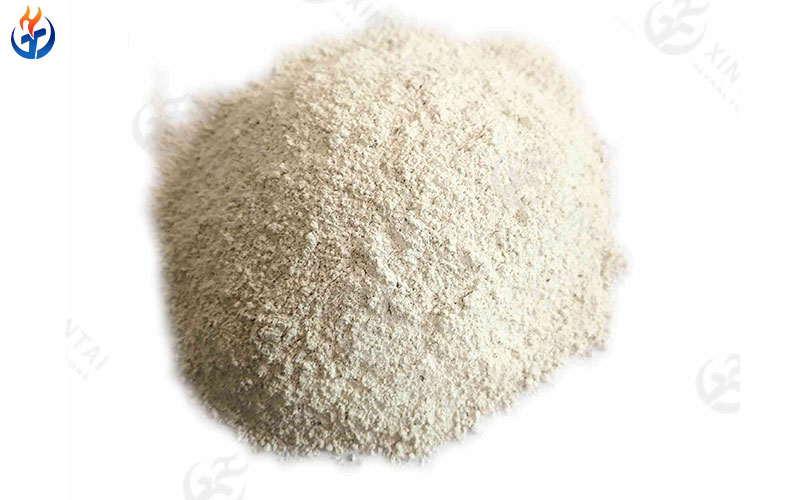
Fine-powder binder systems rely primarily on particle packing, surface interactions, and temperature-dependent reactions to develop a strong refractory structure. Common ingredients include alumina ultrafines and reactive magnesia, selected according to the intended formulation.
Because these systems contain little or no cement, they can achieve very low CaO levels. This is beneficial when designing castables that require high-temperature stability and resistance to aggressive metallurgical slags.
Properly formulated fine-powder systems can produce dense microstructures and improve the balance between hot strength and corrosion resistance. Reactive magnesia also influences the formation of magnesium-aluminum-containing phases, including spinel, under appropriate conditions. Such reactions can contribute to the properties of aluminum magnesium refractories, although their effects depend on composition, temperature, and processing.
These systems are suitable for demanding metallurgical applications where conventional cement additions may be undesirable. However, their performance depends heavily on particle-size distribution, powder reactivity, dispersant selection, and mixing-water control. Careful formulation and installation are necessary to achieve consistent results.
4. Chemical Binders: Phosphate and Silica Sol
Chemical binders provide alternative bonding mechanisms for specific aluminum magnesium castable applications. Phosphate-based binders and silica sol are two options used in selected refractory formulations.
Phosphate-Based Binders
Phosphate binders develop strength through chemical reactions with suitable refractory ingredients. Depending on the formulation and curing conditions, they can provide useful early strength and support rapid repair operations.
These characteristics make phosphate-bonded materials relevant to certain maintenance applications where short turnaround times are important. However, their high-temperature stability, phase development, and resistance to slag attack vary with binder chemistry and refractory composition.
Consequently, phosphate binders should be selected according to the required service temperature, chemical environment, and installation method rather than treated as a universal replacement for cement.
Silica Sol Binders
Silica sol consists of fine silica particles dispersed in water and can provide bonding without introducing the CaO associated with calcium aluminate cement. It is used in selected low-cement or cement-free refractory systems where reduced calcium content and a dense microstructure are desirable.
After appropriate drying and thermal treatment, silica-sol-bonded castables can develop useful structural integrity. However, silica sol introduces SiO₂, which may react with other components and influence the formation of liquid phases at elevated temperatures. Its suitability for aluminum magnesium castables therefore depends on the overall chemical composition and slag compatibility.
Silica sol can also require more careful control of drying conditions and formulation costs more than some conventional alternatives.
5. Composite Binder Systems
In practical refractory manufacturing, a single binder does not always provide the best combination of installation properties and service performance. Composite binder systems combine different bonding mechanisms to meet specific application requirements.
Common approaches include low-cement systems combined with ultrafine powders, fine-powder systems incorporating silica sol, and selected combinations of cement and chemical binders.
These combinations can help balance workability, curing behavior, ambient strength, hot strength, and corrosion resistance. For example, cement may provide early strength, while ultrafine powders improve particle packing and support the development of a denser structure.
However, combining binders requires careful compatibility assessment. Interactions between chemical additives, magnesia, cement hydration products, and fine powders may affect setting time, flowability, expansion, and high-temperature phase development. Laboratory testing and application trials are therefore important before adopting a composite system for industrial production.
6. Key Factors in Binder Selection
Selecting a suitable binder for aluminum magnesium castables requires an evaluation of the entire service environment rather than a comparison of binder types alone.
- Operating temperature and thermal conditions: The binder must support the required hot strength and dimensional stability throughout the expected temperature range.
- Molten steel and slag exposure: Chemical compatibility is essential because binder-derived oxides and reaction products may influence corrosion resistance.
- Installation method: Casting, vibration, pumping, and repair operations impose different requirements for flowability, setting time, and early strength.
- Curing and drying schedules: The selected system must be compatible with available maintenance time, moisture removal procedures, and heating conditions.
- Cost and service life: Initial material cost should be evaluated alongside installation efficiency, maintenance frequency, and lining durability.
A suitable binder system, supported by appropriate aggregate selection and particle-size optimization, helps improve overall castable performance.
Conclusion
Binders are essential components in aluminum magnesium castables, influencing both construction quality and high-temperature service behavior. Calcium aluminate cement offers reliable early strength, while low-cement, ultra-low-cement, fine-powder, and chemical binder systems provide alternatives for more demanding applications. Composite systems can further optimize performance when their components are compatible.
Ultimately, the best binder depends on operating conditions, slag chemistry, installation requirements, and performance targets. Through careful formulation, controlled production, and appropriate application procedures, manufacturers can develop aluminum magnesium castables with improved structural stability, corrosion resistance, and service reliability in metallurgical equipment.